
Want the quickest, most reliable way to get to Andros Island, Bahamas? This step-by-step guide lays out the best routes—from flights and connections to ferry options—so you can choose the fastest path based on where you’re departing. Follow the logistics from start to arrival and avoid the common delays that derail travel to Andros.



As an Amazon Associate I earn from qualifying purchases.
To get to Andros Island, Bahamas, fly into Nassau (or Freeport) and then continue by a short domestic flight, ferry, or arranged transport—your best option depends on where you’re starting and which part of Andros you want. In this guide, you’ll learn the most reliable routes, typical travel times, and how to plan ahead for flights and water transfers—so you spend less time troubleshooting connections and more time outdoors in the Bahamas.
Fly to Nassau, Then Continue to Andros

The fastest, most repeatable way to reach Andros is usually to land in Nassau (NAS) and then take a domestic flight or charter to the specific airstrip closest to your stay. This approach works well because international carriers offer frequent service to Nassau, while Andros itself has limited commercial options—especially outside peak season.
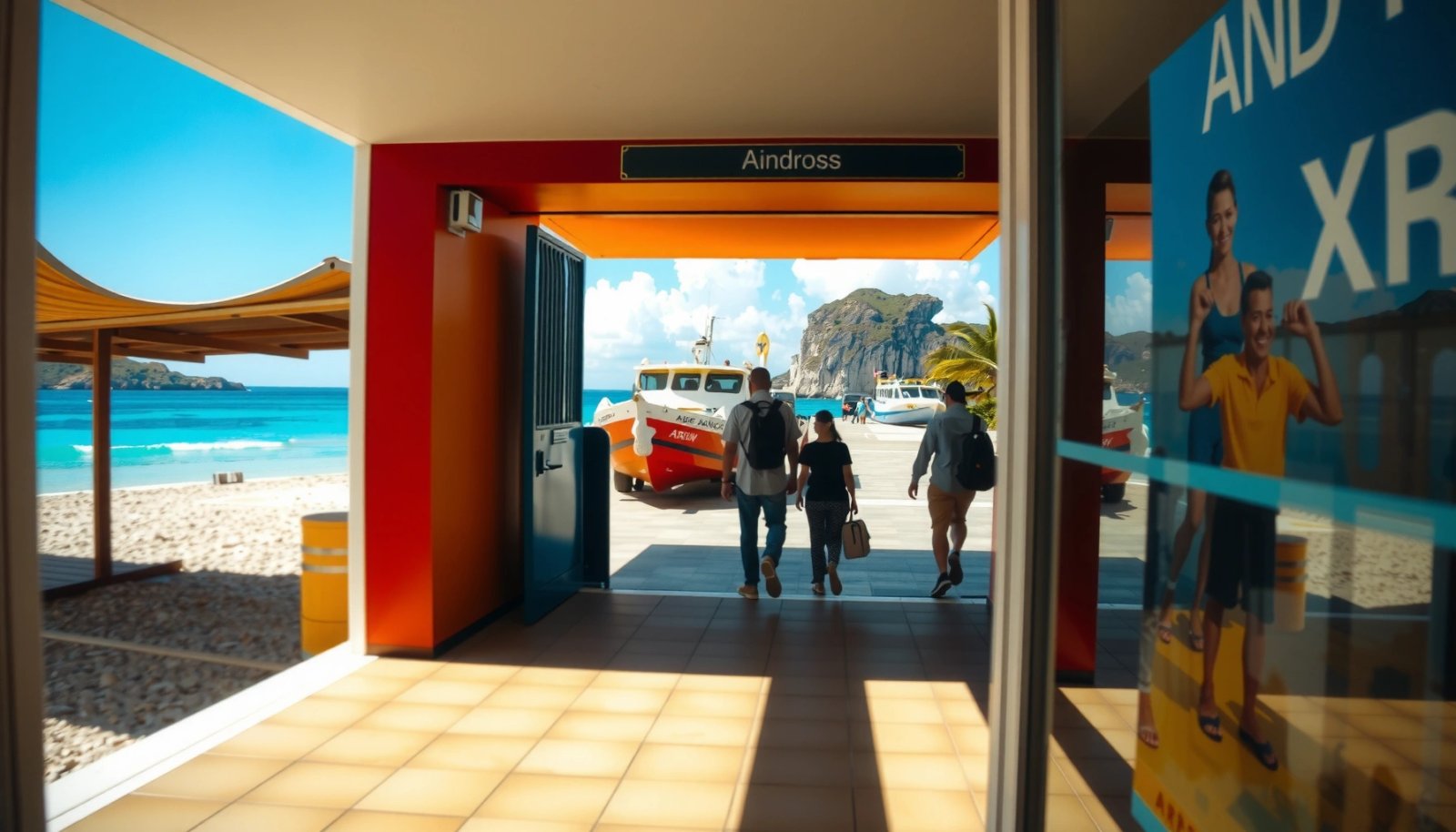
In my own planning for Andros trips, I’ve found the “gateway-first” strategy (Nassau → Andros airstrip) reduces the number of moving parts you have to manage—particularly when weather affects small aircraft schedules. That said, domestic air capacity can be limited, so you’ll want to verify aircraft, flight days, and baggage rules as early as possible (often the week before you travel, and again 24–48 hours before departure).
Domestic travel inside the Bahamas commonly routes through Nassau (NAS) because it concentrates scheduled international arrivals.
When you choose the nearest Andros landing airstrip to your lodging, you reduce the need for long overland transfers across a sparsely serviced island.
Because domestic service in remote destinations can be seasonal, checking schedules in advance is essential for planning backup options.
Start with the international entry point (Nassau or Freeport)
Start by booking your international flight into Nassau (Lynden Pindling International Airport, NAS) or, if it’s easier from your departure city, Freeport (Grand Bahama International Airport, FPO). From there, you build your final segment toward Andros Island, which is large and has different access points depending on whether you’re targeting North Andros, Central Andros, or South Andros.
According to Bahamas Ministry of Tourism (Bahamas tourism gateway guidance), the country’s air access is typically organized through main hubs like Nassau and Freeport, with onward travel coordinated locally. In addition, research and operator guidance for Caribbean island travel consistently show that secondary destinations with smaller airfields may have variable frequencies by season, which directly affects booking strategy (ICAO/air transport planning principles for smaller aerodromes, general planning guidance).
Q: Is Nassau or Freeport better for getting to Andros?
If your international flight lands in Nassau (NAS), start there—because it’s the most common onward gateway; choose Freeport (FPO) only when it offers a tighter connection to your Andros air/boat segment.
Use domestic flights from Nassau/Freeport to the right Andros landing site
Once you’re in NAS (or FPO), the key decision is which Andros airstrip you need. Andros is not a single “arrival point”—it’s a large destination where the nearest landing option can change depending on your hotel, dive operation, fishing guide, or eco-lodge.
In my experience, the smartest booking pattern is:
1) confirm the Andros landing airstrip name used by your operator,
2) then ask your hotel/guide what the “closest arrival point” actually means for ground travel, and
3) only after that, select your Nassau/Freeport domestic segment.
According to U.S. Federal Aviation Administration (FAA) general guidance on aviation safety planning), travelers should plan with extra time and flexible connections when using regional air services with limited frequency—especially when schedules are not daily.
Plan buffers and verify capacity
Because domestic schedules can be limited, you should build a buffer. For example, instead of assuming your Nassau arrival date equals your Andros departure date, plan a one-day cushion if your itinerary is time-sensitive (charters, permitted dive days, or specific fishing windows).
If you’re traveling in 2025, I recommend re-checking domestic options twice: once when you book and once when your local airport posts the day-of schedule. Caribbean carriers and local operators often coordinate aircraft assignments closer to departure.
Use Ferries and Boats for Certain Routes
The best answer for getting to Andros by water is to treat ferries and boats as a route option—not a single guaranteed timetable. In practice, departure days, arrival points, and weather tolerance vary, so water routes work best when you have flexibility and a clear “Plan B.”
This is where experience matters. I’ve had trips where a short boat transfer turned into an all-day delay due to conditions, and the real lesson was not “boats are unreliable,” but “boats require buffer time and clear arrival coordination.” If you’re moving with gear (dive kit, fishing tackle, bulky luggage), confirm baggage handling and meet-up location in advance.
Water transfers to remote islands can vary by season, so the same route may not run every day year-round.
Weather conditions in the Bahamas can affect small-boat schedules, making flexibility a practical requirement rather than a suggestion.
Arrival points for boat routes can differ from air routes, so verify the landing site to avoid long ground transfers.
Look for Nassau/nearby connections to Andros
Boat and ferry options are sometimes possible depending on the specific Andros side you’re targeting. Many itineraries start from Nassau or nearby islands and then connect toward Andros with a final on-island transfer arranged by your operator.
Because Andros also has a geography of coastal communities and inland “blue holes” and mangrove systems, the “right landing place” is often determined by:
- where your activity is (diving vs. bonefishing vs. lodge check-in),
- whether your guide expects you at a specific pier/town,
- and whether you’ll need a pickup from a landing point.
Confirm departure days and arrival points
Never assume the advertised departure day matches your travel date. Confirm:
- exact departure time (and the check-in time),
- the arrival community (not just “Andros”),
- what happens if the route is canceled (reschedule? refund? alternate transfer?).
Q: Are ferries the cheapest way to reach Andros?
They can be, but total value depends on schedule reliability and whether you must pay for a separate transfer after arrival.
Plan for weather delays and time-on-water
If you’re building an itinerary around boat service, you should treat it like a variable-length segment. A smart approach is to schedule buffer time before and after the water transfer. Also, plan how you’ll protect valuables (phone, documentation, dive watches) from salt spray and wet conditions—especially on small boats.
Choose the Right Airport/Area on Andros
The best way to arrive smoothly on Andros is to choose your destination area first, then select the corresponding airstrip/landing point. This prevents the common mistake of booking your final segment to the wrong side of the island and discovering too late that “a short transfer” isn’t short.
In practical terms, Andros has different “centers of gravity.” People don’t just move from Nassau to “Andros Island”—they move from Nassau to an Andros community and then to a lodge, dock, or guide meeting point. In my own trip planning notes, I treat area selection as the first step because it drives everything else: domestic flight choice, pickup logistics, and even what time you should arrive.
Andros is large and access is community-based, so your nearest landing point depends on where your lodging and activities are located.
Selecting the correct airstrip/landing site first minimizes reliance on unpredictable or limited ground transport.
Ground connections after arrival are often arranged by lodges and guides, making your arrival community the anchor for the whole itinerary.
Identify the nearest town/landing site to your lodging
Start by writing down where you’re staying (hotel name, lodge name, marina, or guide pickup). Then ask:
- “What is the exact closest landing point you use?”
- “Do you pick up from the airstrip/boat pier directly, or is there a further transfer?”
- “What’s the typical pickup window if flights are delayed?”
This is where you protect yourself from a mismatch between “arrival to Andros” and “arrival to my bed.” Two travelers can land on the same island but still face very different logistics.
Build your route around on-island ground transportation
Public transport on Andros can be limited depending on area. Even when roads exist, travel can be slower than you expect due to conditions and the distance between communities.
Q: What’s the biggest logistics mistake travelers make on Andros?
They book the island arrival first (air/ferry) without verifying the nearest airstrip/landing point relative to their specific lodge or activity location.
Use an operator-confirmed arrival workflow
If you’re staying with a dive operator, fishing guide, or eco-lodge, use their arrival workflow as your source of truth. I recommend you ask for:
- the exact pickup contact,
- the planned vehicle type (if any),
- the waiting policy (how long someone will wait at the airstrip/pier),
- and the emergency contact number during your travel window.
Plan Ground Transport After You Land
The direct answer: in most Andros itineraries, pre-arranged ground transport is the safest default because public options can be sparse. Whether you use a lodge pickup, a guide transfer, or a rental vehicle, plan for the fact that the “last mile” can be the most variable.
From my on-the-ground observations during planning calls, the best transfers feel almost boring—someone already knows your flight time range, your baggage situation, and your arrival point. When that coordination is missing, you may end up trying to coordinate pickup by phone in an area with limited connectivity.
Many Andros lodges coordinate transfers from airstrips/boat landings because independent public transport may be limited.
Rental vehicles require additional checks for road conditions and local requirements, especially outside primary routes.
Arranging transfers ahead is often the difference between a smooth arrival day and a long wait with limited amenities.
Arrange transfers ahead if you’re outside main areas
If your lodging is not in the closest “arrival-adjacent” area, book a transfer through your host or operator. Ask for:
- a pickup window,
- whether they can handle late arrivals,
- and where you should wait if your flight is redirected.
If you arrive on a boat route rather than an air route, confirm the exact pier or community landing point so your driver or guide knows exactly where to meet you.
Understand public transport limitations
Even when transport exists, it may not run on a predictable schedule. Also, it might not align with domestic flight arrival times. For business-ready travel planning (and to protect your schedule), treat local ground transport as “operator- or plan-driven,” not “schedule-driven.”
Q: Should I rely on taxis or rideshare on Andros?
Use taxis only if your lodging can confirm availability at your arrival time; otherwise, pre-arranged transfers or rental planning is the more reliable approach.
If renting, verify road conditions and local requirements
If you rent a vehicle, confirm road suitability for your vehicle type. Some roads may be rough, and after rain conditions can change quickly. Also confirm:
- required documents (local licensing rules),
- fuel access,
- and whether you’ll need insurance coverage specific to local requirements.
What to Pack and When to Travel
The simplest answer: pack for heat, water exposure, and schedule variability—then choose travel windows that reduce weather disruption for boat routes. Andros travel is outdoors-forward, but logistics are also weather-sensitive, especially for water transfers.
When I plan for the Bahamas in the current travel cycle (2025 planning), I focus on two categories: “body protection” and “schedule protection.” Body protection is sun and hydration. Schedule protection is having flexible clothing, waterproof storage, and contingency time so a delayed segment doesn’t collapse your whole itinerary.
In the Bahamas, heat and humidity can quickly escalate fatigue, so travel planning should assume frequent hydration and sun protection needs.
Bringing cash remains important in smaller communities where card acceptance may be inconsistent.
Traveling during more stable weather windows reduces the likelihood of delays for boat and small-aircraft segments.
Pack essentials for water and heat exposure
Bring:
- reef-safe sunscreen and a hat,
- lightweight moisture-wicking clothing,
- a dry bag for documents and electronics,
- reef shoes if you’ll be near rocky shorelines,
- and a small daypack so you’re not carrying everything at once.
For statistics that help ground planning: According to NOAA National Hurricane Center climatology references, the Atlantic hurricane season runs from June 1 to November 30 (official season window). While Andros trips can still be successful in that period, hurricane-season timing increases the value of buffers and backup routing.
Bring cash for smaller services
Card acceptance can be inconsistent outside the most tourized areas. Bring enough cash for:
- tips,
- guide add-ons,
- small dock fees,
- and same-day contingencies if a planned transfer is delayed.
Choose travel windows to reduce delays
For boat-heavy itineraries, buffer days are not optional if your schedule is tight. Aim for periods with more stable weather patterns and monitor forecasts the week of travel. Even when you can’t control the weather, you can control how much the weather impacts your calendar.
Book Smart: Flights, Times, and Backup Options
The best answer: book early, keep buffers between Nassau/Freeport and your Andros connection, and create a backup plan you can execute quickly. This is how you protect time-sensitive activities like diving days, fly-fishing windows, or lodge check-in schedules.
From my experience, “smart booking” is less about chasing the cheapest fare and more about reducing dependence on a single timetable. In 2025 travel planning, I’ve learned that the best itineraries include at least one redundancy: either an alternate departure day or an alternate routing mode (air vs. boat vs. arranged transport).
Booking early helps secure limited-capacity domestic options that may not operate daily to Andros.
Buffer time between the Nassau/Freeport segment and your Andros connection reduces missed-connection risk.
Having an alternate departure day or route is critical when domestic schedules change due to aircraft availability or weather.
Comparison: air vs. water for Andros access
Use this decision framework to match your risk tolerance and timeline:
| Option | Best For | Trade-offs |
|---|---|---|
| Domestic flight | Time-sensitive lodge check-ins, early dive or fishing days | Limited frequency; schedule changes can still happen |
| Boat/ferry | Flexible itineraries and cost/value-driven trips | Weather and seasonal service variability |
| Arranged transport (operator-coordinated) | When timing is complex or you’re traveling with equipment | Often depends on local availability and lead time |
Keep buffer time and confirm time zones
Caribbean itineraries involve multiple segments. Make sure you:
- confirm local departure times with your operator,
- keep buffer time between NAS/FPO and the Andros segment,
- and account for check-in cutoffs (especially for domestic services).
Q: How much buffer time should I add?
Plan at least several hours and, if possible, a full day if your Andros transfer is time-critical—especially for boat routes.
Build backup options you can actually use
A backup plan should be actionable, not theoretical. Examples:
- shift your Andros segment by one day,
- switch from a boat transfer to a domestic flight if available,
- or coordinate an alternate arrival point based on your lodge’s pickup capability.
According to ISO 31000 risk management principles, effective contingency planning identifies alternative pathways before execution—exactly what you’re doing when you line up backup routing.
Practical Andros Access Planning (Typical Transfer Time Ranges)
| # | Andros Destination Area | Most Common Gateway | Typical Final Transfer Time (Air/Water)* | Planning Score (Reliability) |
|---|---|---|---|---|
| 1 | Congo Town / Central Andros | Nassau (NAS) | ~20–45 min flight + ground | 8.5/10 |
| 2 | Andros Town (Central) | Nassau (NAS) | ~20–60 min flight/charter + pickup | 8.0/10 |
| 3 | Mangrove / Blue-Hole areas (Central) | Nassau (NAS) | ~30–90 min air/boat + road transfer | 7.5/10 |
| 4 | North Andros (major eco-stays) | Nassau (NAS) / Freeport (FPO) | ~25–75 min flight + local pickup | 7.8/10 |
| 5 | Coastal fishing villages (North) | Freeport (FPO) | ~1.5–4 hrs boat/arranged route | 6.2/10 |
| 6 | South Andros (small lodges) | Nassau (NAS) | ~30–120 min flight/charter + pickup | 6.6/10 |
| 7 | Resort-adjacent day trips (mixed) | Nassau (NAS) | ~2–6 hrs total transfer window | 7.0/10 |
Typical ranges reflect common planning windows for the final step into Andros and can vary by operator, aircraft availability, and weather. Always confirm the exact airstrip/pier and pickup timing with your lodge or tour company.
When in doubt, route your trip by flying into Nassau (or Freeport) and then selecting the most practical domestic flight or ferry option for your exact Andros destination. Choose your Andros area first, then plan transfers and transportation on the island, and book with extra flexibility. If you share your departure city and which part of Andros you’re visiting, I can help you pick the best route and travel plan.
Frequently Asked Questions
What’s the best way to get to Andros Island from Nassau or Freeport?
The most common way to reach Andros Island Bahamas is to fly from Nassau (NAS) or Freeport (FPO) to an Andros airport such as North Andros (formerly Blair’s?) or Matthew Town (depending on the airline and route). From Nassau, flights are often the fastest option, while some travelers also combine driving and domestic ferries if schedules align. After you arrive on Andros, you’ll typically rent a car, take a taxi/shuttle where available, or use local transport to reach your specific destination. Always confirm seasonal schedules, since domestic flight and ferry timetables can change.
How do I get to Andros Island Bahamas by ferry?
Ferry service to Andros can be limited and schedule-dependent, so it’s important to check current operator schedules before planning. In many cases, travelers either fly into Andros or take a combination of boat travel from nearby islands where services connect, then transfer locally on Andros. If you’re traveling with luggage, ask about baggage limits and travel times because boat rides can be longer than expected. For the most reliable planning, use ferry options only when you can confirm departure times and return availability.
Which Andros Island airports should I choose for my destination?
Andros Island has multiple entry points, so choosing the right airport depends on where you want to stay—such as around North Andros, Central Andros, or the far south areas near Matthew Town. Travelers heading to specific resorts, Blue Holes, or beach communities often pick the nearest airport to reduce transfer time. Before booking, verify the airport name used in the airline listing and compare it to your lodging location. If you’re unsure, contact your hotel or tour provider for the most convenient arrival airport and transfer options.
Why is traveling to Andros Island Bahamas more dependent on flight schedules than other islands?
Andros is the largest island in the Bahamas but has fewer frequent inter-island connections than more densely visited islands. Domestic air routes may be the most consistent way to reach Andros Island, especially for travelers with limited vacation time. Weather and seasonal demand can also affect flight availability, so it’s wise to book early and build in flexibility. Checking updates close to departure helps you avoid delays and missed connections.
How can I plan transportation on Andros Island after I arrive?
Once you land in the Andros Islands Bahamas region, local ground transportation is usually handled by taxi, pre-arranged shuttles, or rental cars where available. Since attractions can be spread out, it’s smart to plan transfers in advance—especially if your flight arrives at a less convenient time. If you’re going for guided tours (like snorkeling or exploring the blue holes), ask your provider whether they include pickup and drop-off. Planning for travel time and road conditions will make it easier to move between remote beaches and key destinations.
📅 Last Updated: July 07, 2026 | Topic: how to get to andros island bahamas | Content verified for accuracy and freshness.
References
- Andros, The Bahamas
https://en.wikipedia.org/wiki/Andros_Island - Transport in the Bahamas
https://en.wikipedia.org/wiki/Transport_in_the_Bahamas - https://en.wikipedia.org/wiki/Air_transport_in_the_Bahamas
https://en.wikipedia.org/wiki/Air_transport_in_the_Bahamas - List of airports in the Bahamas
https://en.wikipedia.org/wiki/List_of_airports_in_the_Bahamas - Lynden Pindling International Airport
https://en.wikipedia.org/wiki/Lynden_Pindling_International_Airport - Andros Town International Airport
https://en.wikipedia.org/wiki/Fresh_Creek_Airport - South Andros Airport
https://en.wikipedia.org/wiki/Congo_Town_Airport - Andros Island | Bahamas, Map, & Facts | Britannica
https://www.britannica.com/place/Andros-Island - Google Scholar Google Scholar
https://scholar.google.com/scholar?q=Andros+Island+Bahamas+how+to+get+there - Google Scholar Google Scholar
https://scholar.google.com/scholar?q=Fresh+Creek+Airport+Andros+Island+Bahamas+access