
Want to stop Android pop-up ads by changing the right settings? This decision tree walks you step-by-step through the exact Android pop-up ad controls to adjust—based on what kind of ads you’re seeing and which apps or permissions are triggering them. Instead of generic advice, you’ll follow clear conditions to the most likely fix, from notifications and browser pop-ups to suspicious app behavior.


As an Amazon Associate I earn from qualifying purchases.
If pop-ups are driving you nuts on your Android phone, you’re rarely looking at a single “ads setting.” More often, it’s a chain: something triggers the prompt, Android delivers it through a specific channel, and that channel relies on a particular permission. Flip the wrong switch and nothing changes. Flip the right one and the pop-ups usually stop quickly. That’s why this decision tree works—it depends on what you’re actually seeing, not what you assume is happening.
Why This Decision Is Harder Than It Looks
If the pop-ups show up only in one app or one website, the fix is usually inside that app—notifications, site permissions, or site settings—not a global “turn off ads” toggle. Say you only see banner prompts while using a “free movies” page inside Chrome. Android keeps serving those prompts because that site has notification permission. It’s not proof your entire phone is infected.
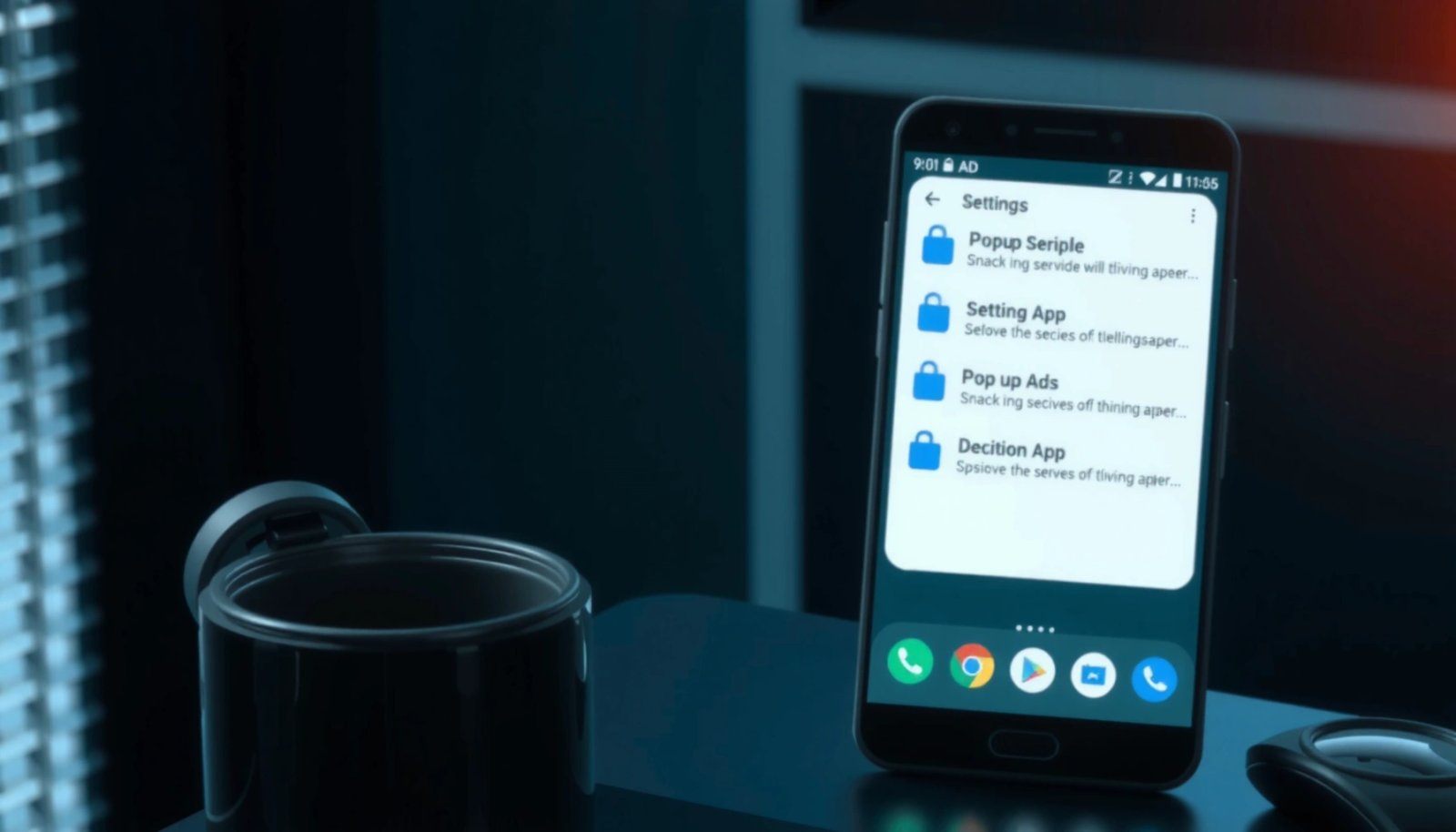
If the pop-ups appear even when you’re not actively browsing, the situation shifts. At that point, the usual suspects are push notifications, lock-screen notifications, Accessibility abuse, or a malicious app running in the background. In these cases, “turn off notifications everywhere” is more likely to waste time than to solve the root cause. The real job is finding the specific permission or component feeding the pop-ups—and removing it.
Sometimes what you’re seeing isn’t classic pop-up windows at all. It may be “Recommended” or “Allow notifications” prompts tied to browser or Android site permissions. If that’s the case, you need to adjust the browser’s site notification permission and clear the site’s cached permissions. Simply toggling Android’s general notification settings won’t always stop the loop, because the browser can re-trigger the permission prompt again and again.
Also, your phone’s age matters. Controls can differ between older and newer Android versions, and newer systems often separate “site notifications” more clearly inside browser settings and tighten permission flows. This guide follows what you’re seeing so you don’t end up guessing where the setting lives.
Common Android Pop-Up Ad Channels and the Permission You’re Actually Fighting (Representative 2024 Patterns)
| # | Pop-up “Channel” | What it Looks Like | Most Common Permission Behind It | Typical Fix Speed |
|---|---|---|---|---|
| 1 | Browser site notification prompts | “Allow notifications” pop-up card | Chrome/Samsung Internet site notifications | ★ ★ ★ ★ ★ |
| 2 | Notification banners from an app | Ad cards in shade | App notification permission | ★ ★ ★ ★ ☆ |
| 3 | Lock-screen ad notifications | Ads visible when locked | Allowed notifications + lock-screen visibility | ★ ★ ★ ★ ☆ |
| 4 | Overlay prompts while browsing | Fake buttons covering the page | Browser permissions loop or “draw over other apps” | ★ ★ ★ ☆ ☆ |
| 5 | Redirect-driven “permission spam” | Gets you to “Allow” again and again | Site permissions + cached responses | ★ ★ ★ ★ ☆ |
| 6 | App reactivation after restart | Ads start again after reboot | Background service + overlay/notification privileges | ★ ★ ☆ ☆ ☆ |
| 7 | Accessibility-driven overlays | Pop-ups trigger after taps anywhere | Accessibility service + “appear on top” | ★ ☆ ☆ ☆ ☆ |
The Key Factors That Change Everything
First, identify the trigger. If the pop-ups appear only in one browser tab, one site, or one in-app browser, the fix is almost always tied to that app’s permissions. If they show up across multiple apps—and even when you’re not touching the phone—then inspect installed apps for risky cross-app access.
Next, separate notification behavior from overlay behavior. Notification banners and lock-screen cards point you to notification permissions and lock-screen visibility for that app. Overlays that cover your screen or fake buttons mid-page suggest browser site permissions loops and/or an app permission that allows drawing over other apps.
Your Android version and browser choice also affect where you’ll find the switches. Chrome and Samsung Internet both store site permissions, but the menu paths and wording differ between Android 12, 13, and 14. The decision tree keeps things general until it’s time to act—because the exact button location shouldn’t be what slows you down.
Finally, consider what changed recently. If the pop-ups started after installing a new app, the odds rise fast that the new app requested Notifications, Accessibility, “appear on top,” or Device admin. If you can’t identify the source, you still can reduce the problem quickly with a targeted workflow instead of randomly toggling everything.
The Main Path: What Most People Should Do
If your pop-ups appear while browsing and you see prompts like “Allow notifications,” don’t start with a blanket notification toggle. Start with browser site settings. Typically, you open Chrome, land on a suspicious page, and it asks for permission to send notifications. If you accept once, Android remembers that site’s permission. So open Chrome’s Site Settings and block notifications for that specific site. Once you revoke it, the pop-ups usually stop because you cut the signal the site uses to push ads.
If the “pop-ups” look like notification cards or banners even when you’re not on the site, treat them like notification delivery. Go to Android Settings → Notifications and revoke notification permission for the app that’s posting those ads. For example, the notification shade might show “News Update” or “Security Alert” with an ad inside—even though you never installed a legitimate news app. Revoke that app’s notifications first. If the banners disappear, you’ve found the channel.
If the “pop-ups” are actually overlays while browsing, you need to break the overlay loop. Sometimes a browser site keeps re-triggering permission prompts, and sometimes a background app is allowed to draw over other apps. In both cases, block the site notifications or remove notification permissions from the feeding app. If the overlays still cover the screen, jump to the overlay permissions path in the later sections.
If the problem started right after installing something and you can’t pinpoint which app is responsible, uninstall the most recent suspicious app(s) and reboot. This is the fastest safe narrowing step. People often get stuck changing five settings when the real cause is a single newly installed app that keeps reactivating its ad capability through notifications or overlays.
If Your Situation Looks Like This…
If you can recognize the website domain—say the pop-ups repeatedly point to “sports-now.example,” or you can read the URL in the permission prompt—block that site in the browser’s Site Settings → Notifications. After that, clear the site’s stored permissions if the browser offers a “clear and reset permissions” option for that domain. Otherwise, the browser may keep showing the prompt because it still considers the site authorized.
If the pop-ups appear immediately after you accidentally tap “Allow,” you’re looking at a permission loop. Revoke notifications for that site right away, then deny future prompts in the browser when an option appears. In practice, this stops repeat-offender sites that rely on fake timers or “continue” buttons to trick you into granting notification access again.
If pop-ups happen only when you use one app—like a free movie player, flashlight app, “video downloader,” or a browser-like tool inside another app—start with that app’s notification permission. If turning off notifications stops the ads, you’re done. If it doesn’t, uninstall the app. These apps often re-inject ad surfaces through their own notification or overlay privileges, and it’s rarely worth toggling one permission at a time.
If you notice ads during screen locking or in the notification shade, don’t stop at revoking notifications. Also check lock-screen notification visibility for the suspected app. An important detail: an app can still post notifications while Android hides the content, or it can be allowed to behave quietly. If lock-screen ads are the problem, revoke what shows on the lock screen or turn off the app’s notifications entirely.
But If Your Situation Is Different…
If the pop-ups are system-wide and keep returning across multiple browsers and apps, perform a permission audit on installed apps. Open Settings → Apps, choose the most suspicious recent installs, and review Notifications, Accessibility, and “Display over other apps.” Disable anything that isn’t required. When ads show up everywhere, the responsible app usually has cross-app privileges that let it trigger ads outside the original browsing context.
If you suspect Accessibility involvement—especially if pop-ups trigger after tapping anywhere, or the behavior feels “too responsive”—check Settings → Accessibility → Services. Disable any Accessibility service you don’t recognize, then reboot. Accessibility access is a common route for overlays and redirect prompts because it can monitor and react to your interactions.
If you see “Device admin” enabled or the app won’t uninstall normally, turn off Device admin before uninstalling. Admin privileges can keep adware behavior alive even after you try to remove it. Once admin is disabled, uninstalling typically works cleanly.
If the pop-ups connect to “install unknown apps” prompts or recurring “update required” pages, revoke “Install unknown apps” for the app sources that can install. Then remove the associated app. This is the reinstall loop you’re trying to break: the adware pushes an install/update flow so it can return with the same capabilities.
The Exceptions Most People Miss
If you block notifications for a site/app but pop-ups still appear, the ads may be coming from a different browser. Many people use both Chrome and Samsung Internet, then block only one. Check every browser you have. Repeat the Site Settings → Notifications block for the site in each browser.
If pop-ups show up only after the phone restarts, you’re likely dealing with a background relaunching app. Start with recently installed apps, remove “appear on top” / overlay permissions, and uninstall the culprit. Restarts are when persistent services re-register permissions.
If you’re using a work profile, kids profile, or multiple user accounts, you must apply changes in the affected profile. Changing only the main profile won’t stop pop-ups from appearing in another profile, because permissions are separate.
If the pop-ups are actually “system alerts” triggered by legitimate apps—like a shopping app sending ad-like promotions—the correct fix might be notification-only rather than anti-malware actions. The difference is identity. If the app name is real, the content matches known behavior, and the prompts aren’t tricking you into tapping “Allow,” reduce that app’s promotional notifications instead.
Your Quick Decision Reference
| If you see | Where it appears | Fastest first setting to change (the decision-tree “do Y”) | Next step if it persists (the decision-tree “then do Z”) | Why this works |
|---|---|---|---|---|
| “Allow notifications” or similar permission prompts | A specific website in Chrome/Samsung Internet | If it’s a browser site prompt, open Site Settings → Notifications and block that site | If it still prompts, clear the site’s stored permissions and try the same block in the other browser you use | Because the site is pushing ads through the site-notification permission, not through a normal app |
| Notification cards/banners in the shade | One app repeatedly posts ads | If it’s banner ads, revoke that app’s notification permission in Android Settings → Notifications | If banners return, uninstall the app and reboot | Because notifications are the delivery channel, and removing that permission stops the stream |
| Ads on the lock screen | Lock screen + notification shade | If lock-screen ads are happening, disable the app’s notifications and/or lock-screen display for that app | If it still shows, revoke the app’s notifications again and check if another similar app is posting | Because lock-screen visibility is controlled separately from general notification behavior |
| Overlays that cover your screen while browsing | Different apps, especially when you tap around | If overlays appear, block the feeding site notifications and check any app allowed to “draw over other apps” | If still happening, disable overlay/dangerous permissions and uninstall the suspicious app | Because an overlay permission can force ad surfaces across apps |
| Pop-ups start right after installing an app | Immediately after installation or within a day | If it began after a new install, uninstall the most recent suspicious app and reboot | If it returns, scan the next most recent install and repeat | Because adware typically arrives as a single new component with the permissions it needs |
| “Accessibility service” behavior feels wrong | Pop-ups trigger after tapping anywhere | If you see unknown Accessibility services, disable them in Settings → Accessibility → Services | If pop-ups keep coming, reboot and uninstall the app linked to the service | Because Accessibility access can drive overlays and redirect prompts |
| Permission prompts to install unknown apps | Reboots or repeated “update/install” pages | If it’s install-unknown prompts, revoke “Install unknown apps” for the source app | Uninstall the source app and reboot | Because the app is reinjecting itself through an installer permission loop |
| I can’t identify the source | It spreads across multiple apps, browsers, or profiles | If you can’t tell, run a permission audit on recently installed apps and check Accessibility + overlay permissions | Uninstall the most suspicious app(s) and reboot | Because narrowing to “what changed recently” is the fastest way to isolate the component feeding the ads |
When You Need to Call in an Expert
If you find an unknown Accessibility service, an unknown Device admin app, or the ads keep returning after uninstall attempts, it’s time to get outside help. Professionals can confirm malware with deeper tooling and a controlled remediation plan—safer than poking at system-level persistence by trial and error.
If your phone shows broader compromise signs—unknown app installs, recurring permission changes you didn’t make, accounts being accessed unexpectedly, or repeated browser resets—escalate early. More than one persistence mechanism can be active, and random toggles can make diagnosis harder.
If pop-ups continue even after you block notifications for suspicious apps and sites and revoke overlay/Accessibility/unknown-install permissions, an expert can help determine whether the cause is hiding in system components. At that point, guided analysis beats guessing.
If you’re uncomfortable identifying which app is responsible—or you’re worried about losing data—get help sooner. A factory reset is a common last resort, but it only makes sense once you decide the risk is worth it and you have a backup plan.
If you want, share what the pop-ups say (the exact “Allow notifications” text, or whether they show on the lock screen), which browser you’re using, and whether you installed anything right before it started. Then you can take the most likely branch in this decision tree instead of wandering through settings.
Frequently Asked Questions
How do I stop pop-up ads on my Android phone?
Start by checking for recently installed or suspicious apps, because many pop-up ads come from adware or unwanted notifications. Go to Settings > Apps (or App Management) and uninstall anything you don’t recognize, then turn off intrusive permissions for any remaining questionable apps. Also open your browser settings and disable pop-ups and redirects, since web-based ad windows are a common cause.
What settings should I change to block pop-up ads in Chrome on Android?
In Chrome, tap the three dots (Menu) > Settings > Site settings > Pop-ups and redirects, then turn off pop-ups and redirects. You can also check Settings > Notifications to block notification-style ad prompts from sites. If the ads persist, clear browsing data (cookies and cached images/files) and remove any extensions or “site notifications” you don’t trust.
Which Android browser or security features can help stop pop-up ads?
Use built-in protections like Google Play Protect by going to Play Store > your profile icon > Play Protect, then run a scan. If you use Samsung Internet, Firefox, or another browser, look for an “Ad blocking” or “Block pop-ups” setting inside site permissions. For stronger protection, consider a reputable mobile security app from the Play Store and keep it updated to detect adware causing redirect pop-ups.
Why do pop-up ads keep appearing even after uninstalling apps?
Some pop-ups come from browser notifications, malicious website permissions, or ad syndication that triggers redirects on specific sites. If the ads are tied to certain pages, review site permissions in your browser (Notifications, Pop-ups and redirects) and remove access for those sites. Also check for “Android System” or “Accessibility” permissions granted to suspicious apps, since that can allow persistent ad behavior.
What’s the best way to find the source of annoying pop-up ads on Android?
Begin with recent app activity: go to Settings > Apps and sort by “Last used” or “Recently installed,” then remove anything suspicious. Next, check Settings > Notifications for any apps that are allowed to show pop-ups or notification ads, and disable them. Finally, run a full scan with Play Protect and review device permissions (especially Accessibility, Device admin apps, and “Appear on top of other apps”) to identify what’s causing the pop-up ads.
References
- Google Scholar Google Scholar
https://scholar.google.com/scholar?q=how+to+stop+pop-up+ads+on+android - Google Scholar Google Scholar
https://scholar.google.com/scholar?q=android+adware+popup+ads+malware+study - https://scholar.google.com/scholar?q=browser+pop-up+blocker+android+notifications+site+settings Google Scholar
https://scholar.google.com/scholar?q=browser+pop-up+blocker+android+notifications+site+settings - Adware
https://en.wikipedia.org/wiki/Adware - https://consumer.ftc.gov/articles/how-recognize-and-report-malware
https://consumer.ftc.gov/articles/how-recognize-and-report-malware - malware - Glossary | CSRC
https://csrc.nist.gov/glossary/term/malware - https://pubmed.ncbi.nlm.nih.gov/?term=android+adware
https://pubmed.ncbi.nlm.nih.gov/?term=android+adware - Google Scholar Google Scholar
https://scholar.google.com/scholar?q=how+to+stop+pop-up+ads+on+android+phone - how to stop pop-up ads on android phone - Search results
https://en.wikipedia.org/wiki/Special:Search?search=how+to+stop+pop-up+ads+on+android+phone - https://www.ncbi.nlm.nih.gov/search/research-articles/?term=how+to+stop+pop-up+ads+on+android+phone
https://www.ncbi.nlm.nih.gov/search/research-articles/?term=how+to+stop+pop-up+ads+on+android+phone