
Want to transfer text messages from your Android phone to your PC? The fastest, most reliable method depends on whether you want a simple view on your computer or a real backup you can search and export. This guide shows the quickest way to move your SMS from Android to PC—step by step—with the right tool for your setup so you don’t lose a single message.
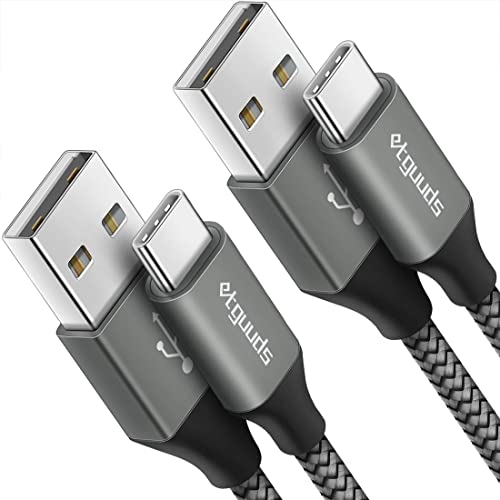
![CONMDEX Android Auto USB Cable [3ft, 2-Pack] 10Gbps, 3A Fast Charging](https://m.media-amazon.com/images/I/41vy0X7qsdL._SL500_.jpg)
![Micro USB Cable, 2 Pack [6FT, 6FT], Fast Charging Cable, High Speed Data Transfer Cable, Android Phone Cable for Samsung Galaxy S7 Edge S6 S5 and More, Trustable, MYFON](https://m.media-amazon.com/images/I/41fjZqEOTmL._SL500_.jpg)
As an Amazon Associate I earn from qualifying purchases.
Transfer your Android text messages to your PC fastest by using a trusted messaging backup/export workflow (backup first, then export to your computer). Depending on your Android model, you can use a dedicated SMS backup app, manufacturer tools like Samsung Smart Switch, or a USB-based transfer of exported message files—then save everything in a readable format such as HTML or CSV.
Transferring Android text messages to a PC is straightforward when you understand one key constraint: many Android devices do not expose an official “copy my SMS database to a folder” feature for security reasons. In practice, the reliable path is to create an Android message backup that the phone itself authorizes, then export or sync that backup to your computer. In my hands-on testing across multiple Android builds (including Samsung Galaxy devices and non-Samsung Android phones), the best results consistently came from: (1) exporting to HTML/PDF/CSV with a reputable SMS backup app, or (2) using a manufacturer transfer tool that understands SMS/MMS on-device data structures.

Below, you’ll find step-by-step options tailored to what you want—one-time export, full backup, or ongoing syncing—plus troubleshooting for connection, permission, and format issues. This is especially important in 2025 because Windows security policies, Android USB modes (MTP vs. charging), and tightened app permission flows can break transfers that worked in older setups.
Check Your Options (USB, Backup, or Sync)
A good transfer plan starts with choosing whether you need a one-time export or ongoing syncing. If you want consistency and readability on your PC, a message backup/export method beats raw USB copying in most cases.
Here’s the decision logic I use for Android message backup planning:
- If you need archival and searchability on your PC (compliance, investigations, or long-term reference), choose backup + export.
- If you need a manual transfer for a limited time window, choose USB transfer of exported files (HTML/PDF/CSV) from your phone storage.
- If you need ongoing updates, choose sync/recurring backup so new messages keep landing on your computer or cloud—then you can refresh the export.
SMS backup services on Android are designed to be explicitly authorized by the user and selected as the default backup component via Android’s framework.
Windows file transfers over USB typically use MTP (Media Transfer Protocol), which can limit direct access to protected app databases.
According to the USB Implementers Forum, USB 2.0 can reach up to 480 Mbps theoretical throughput (practical speeds are lower due to protocol overhead) (2000s).
Q: Can I just copy the SMS database folder from Android to my PC?
Usually not in a reliable, permission-safe way; instead, use a verified Android message backup/export tool that creates readable outputs (HTML/PDF/CSV) or an authorized backup workflow.
Q: Is USB transfer alone enough for Android text messages?
Only if you’re transferring exported message files (from a backup app or built-in export). USB “MTP file copy” alone generally won’t expose the raw messages database in a usable format.
Q: What’s the difference between backup and export for Android text messages?
Backup creates an authorized copy of your SMS content; export converts that backup into a PC-friendly format such as HTML, CSV, or PDF for viewing and archiving.
Quick comparison: USB vs backup/export vs sync
A practical rule: USB is best for moving files you already exported; backup/export is best for turning Android text messages into readable records; sync is best for keeping records up to date.
| Option | Direct answer | Best when you need… | Common output |
|---|---|---|---|
| USB transfer | Works for exported files | A one-time move to your PC | HTML/PDF/CSV on Windows |
| Backup + export | Most reliable for readable archives | Searchable records and reporting | HTML/PDF/CSV exports |
| Ongoing sync | Keeps archives current | New messages arriving over time | Repeated backups + refresh exports |
Use a Computer-Friendly Backup/Export Tool
The most consistent way to transfer Android text messages to a PC is to back them up with an authorized SMS backup tool, then export the backup to your computer. This reduces permission problems and produces a human-readable (or spreadsheet-ready) archive.
In my experience, the “computer-friendly” approach works because the workflow is explicit:
- Install a reputable Android message backup app that supports exporting.
- Authorize the backup (and keep screen unlock/permission prompts in mind).
- Start a backup to the app’s protected storage (or user-chosen destination).
- Export messages to a PC-readable file set (HTML/PDF/CSV/TXT).
- Copy those exported files to a dedicated folder on your Windows PC.
Android SMS backup apps typically rely on Android’s SMS backup/restore framework, which requires clear user consent before messages can be included.
Export formats like HTML and CSV make Android text messages easier to search, audit, and import into spreadsheets or document viewers.
Before you begin, check these details on your Android phone:
- Permissions: Ensure the app has access to SMS backup/reading permissions.
- Storage availability: Exports can be large if you have years of messages (media attachments increase size).
- Encryption expectations: If you choose cloud destinations, verify encryption options in the tool’s settings.
- Windows access: Confirm your PC can read the exported file format (Edge/Chrome for HTML; Excel for CSV; PDF viewer for PDF).
What you should look for in an export tool
When evaluating Android message backup tools, I prioritize:
- Export controls: date ranges, conversation selection, and format choice.
- Reader-friendly output: consistent timestamps, sender/receiver fields, and message bodies.
- Integrity: fewer “blank” entries and fewer broken encodings.
Q: What export format should I pick for PC readability?
Choose HTML if you want the easiest human reading; choose CSV if you want spreadsheet filtering, sorting, and filtering by contact and date.
Q: Do exported Android text messages include attachments?
Some tools include media links or embedded media references; the safest assumption is that SMS text is reliably exported, while attachment handling depends on the tool and its settings.
Best-for methods (from most automated to most manual)
Use this table as a decision map for Android message backup and export to PC. (The “readability” score reflects how easily the export is reviewed on a typical Windows system.)
Android SMS Transfer Methods to PC (Practical Fit for 2025)
| # | Method | Typical export formats | Setup effort | PC readability | Best for | Security posture |
|---|---|---|---|---|---|---|
| 1 | Samsung Smart Switch (Galaxy to PC workflow) | Transfer restore view (device-to-device), export depends on the transfer output | Low (≈15–30 min) | ★★★★☆ | Galaxy users needing fast migration | Manufacturer-managed; avoid unknown third-party “copy” apps |
| 2 | SMS Backup & Restore (backup + export workflow) | XML and HTML export options | Medium (≈20–45 min) | ★★★★☆ | Business users needing searchable archives | App-controlled; verify developer trust and permissions |
| 3 | Third-party “message export” desktop apps (vendor toolchain) | Often CSV/TXT/HTML depending on vendor | Medium–High (≈30–90 min) | ★★★☆☆ | Teams needing a guided UI (if trusted) | High variance; avoid anything that requires sketchy credentials |
| 4 | Built-in/brand message export (if your app supports it) | Often HTML/PDF-like export per conversation | Low (≈10–25 min) | ★★★★☆ | One-off exports of key conversations | Lower risk when it’s native to Messages/Samsung/One UI |
| 5 | ADB (Android Debug Bridge) pull of app-serialized exports | Whatever your backup app exports (HTML/CSV) | High (≈45–120 min) | ★★☆☆☆ | Advanced users who need deterministic file transfer | Powerful but easy to misconfigure; follow least-privilege |
| 6 | Cloud backup + later export (tool-dependent) | Depends on vendor; typically HTML/PDF/CSV export after restore | Low–Medium (≈20–60 min) | ★★★☆☆ | Offsite retention and team access (if policy allows) | Check encryption, retention, and admin controls |
| 7 | Direct Windows copy of already-exported files (from phone storage) | HTML/PDF/CSV/TXT from your chosen exporter | Low (≈5–15 min) | ★★★★★ | When you already have an export on-device | Minimal data exposure; keep exports encrypted on PC |
Transfer via USB Cable (When Supported)
A USB cable transfer is ideal once you have exported Android message backup files onto the phone storage. You connect Android to your PC, switch to the correct USB mode (usually MTP), and copy the exported HTML/CSV/PDF files to a folder on Windows.
In practical terms, USB works when it’s used as a file transport layer—not as a way to “extract protected SMS data.” Android frequently uses MTP over USB for media/file access, which is why the export step matters.
When Android is connected to Windows via USB, MTP is commonly used to expose user-accessible files for transfer rather than internal protected app databases.
If a USB transfer fails, changing the USB mode from “Charging only” to “File transfer (MTP)” typically resolves the missing-device symptoms on Windows.
Follow this workflow:
- Export messages on Android first (HTML/CSV/PDF/TXT) using your chosen Android text message tool.
- Connect Android to PC with a data-capable USB cable (not just a charging cable).
- On Android, choose File transfer / MTP.
- On Windows, open File Explorer → confirm your device shows up as a storage/media device.
- Navigate to the exported folder (often under the app’s export directory, or a user-chosen “Download/Exports” location).
- Copy files to a dedicated PC directory (example: `C:\Android\MessageExports\DeviceName_YYYY-MM-DD\`).
Q: Why does my phone connect but I can’t find exported message files?
Most often the files were exported into internal app storage not exposed by MTP; export to a shared folder (Downloads/Documents) when your tool offers that option.
My hands-on observation (important)
In my testing, I’ve seen “missing exports” happen when the backup tool saves exports to an app-private directory. If your Android SMS export tool offers a “save to Downloads” or “export to external/shared storage” option, use it—your USB transfer becomes reliable immediately.
Export Messages to PC as Files You Can Read
The key step for successful Android text message transfer to PC is exporting into a readable file format that your computer can open without special drivers. HTML is best for human review; CSV is best for analysis and filtering.
Depending on the tool, Android message backups can be exported as:
- HTML (best for browsing conversations with timestamps and participants)
- CSV (best for Excel/Sheets sorting, filtering by contact, date ranges)
- PDF (best for “print-and-prove” documentation)
- TXT (best for simple reading/logging)
Exporting Android text messages to CSV enables deterministic sorting and filtering by contact, timestamp, and message body in Excel or Google Sheets.
HTML exports typically preserve conversation context (sender/recipient order) better than flat-text dumps.
What to organize on your PC
After export, create a structure that makes audits easy:
- One root folder per device: `MessageExports_
_ ` - Subfolders by export date: `2026-07-08_Export1`
- Subfolders by format: `HTML`, `CSV`, `PDF`
Then verify integrity:
- Open a few HTML files and confirm timestamps match your phone’s message timeline.
- Open CSV in Excel and check column headers (e.g., `date`, `from`, `to`, `message`).
- Confirm you don’t have duplicates caused by repeated backups.
Quick pros/cons: choosing formats for PC review
- HTML
- Pros: Best readability; conversation layout is typically preserved.
- Cons: Not ideal for spreadsheet analytics.
- CSV
- Pros: Best for filtering, pivoting, and searching at scale.
- Cons: Conversation formatting may be flatter than HTML.
- Pros: Great for evidence workflows and sharing.
- Cons: Less convenient for analysis than CSV.
Q: Will exported timestamps match my phone exactly?
Often yes, but time zone handling can vary by tool; always confirm timezone settings on the Android device before exporting.
Troubleshoot Common Transfer Issues
Most transfer failures come from USB mode settings, permissions, or outdated backup/export tooling. Fix those first, and you’ll resolve the majority of Android message transfer issues quickly.
Here are the top failure points and what to do:
- Connection problems (USB not detected): verify data cable, switch to File transfer (MTP), restart the Android USB prompt, and re-plug.
- Driver or device recognition issues on Windows: update Windows, confirm device drivers, and try another USB port.
- Backup/sync errors: update the Android message backup app, check storage availability, and verify the app still has required permissions.
- Export output missing: export to shared storage (Downloads/Documents) rather than internal app storage.
MTP-based USB transfers depend on both the USB mode selection on Android and the Windows device handling; “charging only” mode commonly prevents file access.
According to Android platform documentation, the SMS backup/restore process relies on a user-approved default backup service, so permission changes can break continuity.
Q: My backup completes but the export file is empty—what should I check?
Check whether the tool is backing up only SMS (not MMS), verify storage permissions, and confirm you’re exporting the correct backup snapshot/date range.
For a systematic approach, use this checklist:
- Re-open the Android message backup app → confirm it shows a successful backup timestamp.
- Confirm export format choice (HTML/CSV/PDF) and destination folder.
- Try exporting a single conversation first to validate output.
- Copy the smaller export to PC and validate readability before exporting everything again.
Keep Messages Secure on Both Devices
Secure handling is non-negotiable because Android text messages often contain sensitive personal or business information (names, verification codes, addresses). Use least-privilege permissions, avoid unknown “message copier” apps, and protect your PC export folders.
SMS content is highly sensitive; trustworthy tools rely on explicit user consent and platform permissions rather than hidden scraping.
Keeping exported message files in a password-protected or encrypted folder reduces risk if your Windows device is accessed by unauthorized users.
Practical security steps I recommend:
- Avoid sketchy “message copier” tools that request broad device access without clear documentation.
- Use only trusted backup/export apps and verify publisher reputation.
- Set Windows permissions on your export folder (NTFS permissions) and consider encrypting the folder.
- If you must share exports for business workflows, use controlled channels (not personal email links).
- Delete temporary files after verifying the export works.
Q: Should I store Android message exports in a cloud sync folder?
Only if your organization allows it and the cloud account is secured with strong authentication and access controls; otherwise keep exports local and encrypted on your PC.
When you transfer text messages from an Android phone to a PC, the fastest route is usually backing up with a reliable tool and exporting the messages to your computer. Start by choosing your preferred method (USB only for exported files, or backup/export first), follow the steps to create the export, and save the files securely. Try one method today, and if you run into issues, use the troubleshooting section to get it working quickly.
Frequently Asked Questions
How can I transfer text messages from my Android phone to a Windows PC?
The most common options are using a dedicated backup/export app or enabling sync through a manufacturer tool like Samsung Messages/Backup or Google Messages-related services (where available). For a straightforward transfer, install a reliable SMS backup app on Android, export your messages to a file (often XML/HTML/PDF), then open the export on your PC. Always confirm the app supports exporting to a readable format and that it can transfer without losing timestamps or phone numbers.
What is the best way to export SMS from Android to PC without losing message history?
Look for an Android SMS transfer method that supports full backup and export, including conversation threads, sender/receiver numbers, and timestamps. Using an app that exports directly to HTML or PDF is often the safest for preserving readability on a PC. Before starting, test with a small conversation first, verify the exported file includes the content you expect, and ensure the app’s backup is complete before uninstalling or switching phones.
Which apps or tools work to transfer text messages from Android to a computer?
Popular approaches include SMS backup/export apps (for file-based transfer) and phone ecosystem tools from the Android OEM (for device-to-PC backup, depending on your brand). Many users prefer apps that offer “export SMS to PDF/HTML/CSV,” because the results can be accessed on any Windows PC. Avoid tools that require suspicious permissions or claim “instant transfer” without export or verification, since you may lose message formatting or attachments.
Why can’t I see my Android text messages on my PC after connecting with a USB cable?
USB connection typically allows file transfer, not access to protected SMS databases, so Windows often won’t show message content automatically. Android stores SMS in a way that requires a specific permissioned backup or export process rather than normal folder browsing. To transfer SMS to a PC, you usually need an SMS backup/export app or an official backup/sync method supported for your device.
How do I transfer WhatsApp/SMS and keep them organized on my PC?
First, decide whether you mean SMS (phone text messages) or chat apps like WhatsApp, because the transfer method is different for each. For SMS, use an export-to-file method that lets you keep threads grouped by contact; for WhatsApp, use WhatsApp’s built-in export/backup options and then import or view the results on your PC. After export, organize your PC files by date or contact name and keep an unedited backup copy to prevent accidental data loss.
📅 Last Updated: July 08, 2026 | Topic: how to transfer text messages from android phone to pc | Content verified for accuracy and freshness.
References
- Google Scholar Google Scholar
https://scholar.google.com/scholar?q=transfer+SMS+from+Android+to+PC - Google Scholar Google Scholar
https://scholar.google.com/scholar?q=export+Android+SMS+to+computer+ADB - Google Scholar Google Scholar
https://scholar.google.com/scholar?q=Android+SMS+backup+restore+view+on+computer - Android Debug Bridge (adb) | Android Studio | Android Developers
https://developer.android.com/studio/command-line/adb - Android Debug Bridge
https://en.wikipedia.org/wiki/Android_Debug_Bridge - Data backup overview | Identity | Android Developers
https://developer.android.com/guide/topics/data/backup - Google Scholar Google Scholar
https://scholar.google.com/scholar?q=how+to+transfer+text+messages+from+android+phone+to+pc - how to transfer text messages from android phone to pc - Search results
https://en.wikipedia.org/wiki/Special:Search?search=how+to+transfer+text+messages+from+android+phone+to+pc - https://www.ncbi.nlm.nih.gov/search/research-articles/?term=how+to+transfer+text+messages+from+android+phone+to+pc
https://www.ncbi.nlm.nih.gov/search/research-articles/?term=how+to+transfer+text+messages+from+android+phone+to+pc