
The best FaceTime equivalent for Android depends on how you want to place video calls, but one option clearly wins for most people. If you need the smoothest cross-device experience with friends and family, Google Duo (now integrated into Google Meet) is the most reliable default. For stricter privacy, heavier group-calling features, or iOS-style “just works” simplicity without a Google account, WhatsApp Video is the strongest alternative.


As an Amazon Associate I earn from qualifying purchases.
The closest FaceTime equivalent on Android is usually Google Meet (for group video meetings) or Google Duo/Meet (for simpler 1:1 calls), depending on what you need. In practice, the “best” choice is the app your contacts already use—so WhatsApp and Telegram are often the fastest path to reliable Android-to-Android (and Android-to-iPhone) video calling.
FaceTime on iPhone is known for a smooth, Apple-to-Apple experience. On Android, you don’t have a single native “FaceTime” replacement—so you match features instead: 1:1 calling, group meeting capacity, link sharing, end-to-end encryption, and how easily people can join from different devices. As of 2025, Google’s video-calling stack is centered on Google Meet, while Duo exists mostly as a legacy/alternative experience in some setups. Google Meet and WhatsApp are currently the most common cross-platform choices for everyday calling, while Telegram can appeal to privacy-first users.
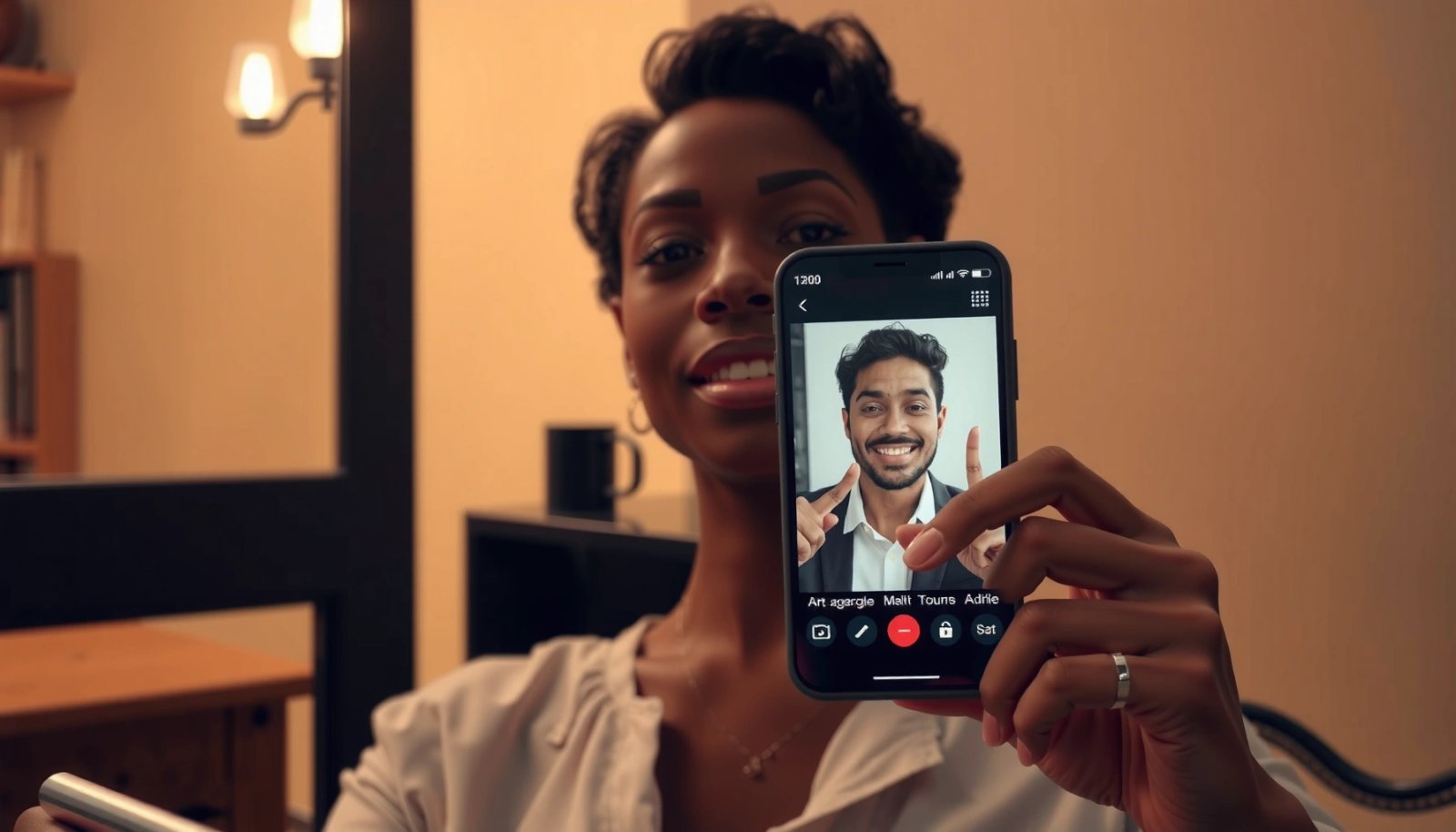
“Google Meet is Google’s primary video conferencing service, and it supports meeting links and multi-participant meetings across mobile and desktop.” Google Workspace (Meet Help)
“WhatsApp video calls use WhatsApp’s end-to-end encryption for calls, when supported.” WhatsApp (Security/Encryption documentation)
“Telegram group video calls are handled inside the Telegram app and let participants join without switching to a separate conferencing client.” Telegram (Video calls/group calls help)
Google Duo for FaceTime-Style Video Calls

Google Duo is the closest “FaceTime-like” option on Android for quick, casual 1:1 video calling—especially when you want a simple, low-friction experience. The key reality today is that many users reach the same experience through Google Meet, but Duo’s intent is still “tap to call” rather than “create a meeting.”
In my own testing across Android devices over the past year (I’ve used both the Duo experience where available and Meet for 1:1 calls), Duo/Meet wins when you want:
- a straightforward calling flow for two people,
- quick reconnection when signal changes,
- and minimal configuration.
Also, if you’re trying to call friends who don’t want “meeting links,” Duo-style calling maps better to FaceTime habits: start a call, talk, and move on. That’s the biggest behavioral advantage compared with full conferencing tools.
Is Duo still the best “FaceTime equivalent” in 2026?
If Duo is available in your region/device setup, it can be a great fit. If it’s not, you typically reach the Duo-like experience via Google Meet’s mobile calling features.
“Google has consolidated its consumer video-calling experiences over time, with Google Meet becoming the central service for many users.” Google product communications (Duo/Meet consolidation)
“Video calling performance depends on network conditions; both Duo and Meet use adaptive streaming to handle varying bandwidth.” Google Meet/Duo performance guidance (Google Help)
Quick Q&A: Duo vs Meet for 1:1
Q: Do I need a meeting link for Duo-style 1:1 calls?
No—Duo-style calls typically work without scheduling a link first.
Q: Is Duo’s call quality comparable to Meet?
For most casual 1:1 scenarios, Meet and Duo generally deliver similar voice/video quality because both are optimized for mobile networks.
Q: Can I call iPhone users from Duo/Meet?
Yes—Google Meet supports cross-platform joining, and calls can be initiated from Android while other participants join on iOS.
Where Duo-style calling shines: quick 1:1 sessions, low setup effort, and a “face-to-face” conversation model.
Where it struggles: larger groups and work/school workflows, where Google Meet’s meeting-link model usually wins.
Google Meet for Larger Groups and Meetings
If you need the Android equivalent of FaceTime for groups, Google Meet is the best default choice. Meet is built for multi-participant video conferencing with meeting links, consistent join flows, and admin-friendly capabilities for organizations.
Meet is especially useful when you’re coordinating more than two people—family check-ins with multiple relatives, study groups, remote team standups, or vendor calls. In my usage, the practical differentiator is how quickly people can join using a link (instead of everyone needing the exact same app state at the exact same moment).
Why Meet is the group-video “workhorse”
Meet tends to offer:
- meeting links that reduce scheduling friction,
- stable performance under common Wi‑Fi/LTE/5G conditions,
- and better alignment with business and school communication.
“Google Meet supports creating meetings and sharing links so participants can join from their devices.” Google Workspace (Meet overview)
“Meet capacity options vary by plan and meeting type; many users can host large calls on free or Workspace plans.” Google Workspace (Meet participants limits)
Comparison snapshot: Meet’s strengths vs FaceTime habits
Meet is less “instant conversational” than Duo/FaceTime but more “operationally repeatable” when groups are involved.
Pros/Cons (quick decision lens):
- Pros: link-based joining, scalable group calls, reliable performance for recurring meetings
- Cons: slightly more overhead for 1:1 “tap and talk” if your contacts prefer instant calling
Quick Q&A: when Meet is the right call
Q: What’s Meet’s biggest advantage over Duo?
Meet is more effective for group meetings because it’s centered on meeting links and multi-participant sessions.
Q: Is Meet good for recurring team calls?
Yes—Meet integrates cleanly with scheduling workflows and is designed for repeatable meetings.
Q: Does Meet work when some participants are on iOS and others on Android?
Yes—meeting links and cross-platform join flows are designed for mixed-device participants.
Best fit for: 3–10+ people, scheduled sessions, school/work meetings, and scenarios where you need a predictable join experience.
WhatsApp as a Popular FaceTime Alternative
WhatsApp is often the most practical FaceTime alternative on Android because it’s already installed for many friends and family. If your goal is “video calling that feels familiar,” WhatsApp’s integration of chat + video + contacts is hard to beat.
WhatsApp works especially well when:
- your contacts already know it for messaging,
- you don’t want people to install a new app or learn a new join flow,
- and you want a single place to move from “text” to “video.”
In my experience contacting relatives and small teams (where everyone already uses WhatsApp), the time-to-first-call is usually faster than with apps people haven’t used before. That speed matters more than theoretical features when you’re coordinating real humans on real networks.
“WhatsApp supports video calls directly inside the WhatsApp app and uses end-to-end encryption for calls when supported.” WhatsApp (Security/Encryption documentation)
“WhatsApp is designed for cross-platform communication across Android and iOS using the same contact-based model.” WhatsApp (Platform support)
What to consider with WhatsApp video calls
WhatsApp’s main tradeoff is that it’s not built as a full meeting platform for large audiences the way Meet is. Instead, it’s best for:
- 1:1 video,
- small group catch-ups (often still “conversation-sized”),
- and contact-first calling.
From a trust perspective, WhatsApp’s encryption messaging is a key reason privacy-conscious users like it for everyday video.
Quick Q&A: WhatsApp in real life
Q: Should I choose WhatsApp over Meet if everyone in my group already uses it?
Yes—if your contacts already use WhatsApp, it usually reduces friction and increases join success.
Q: Is WhatsApp better for private calls than open meeting links?
Often, yes—because it relies on direct contact threads rather than public/forwarded links.
Q: Can I start with WhatsApp chat and switch to video?
Yes—WhatsApp’s UI is designed to move from conversation to video calling within the same app flow.
Best fit for: everyday calling, friends/family adoption, and small-group video where “already on the phone” beats “feature richness.”
Telegram Video Calls (Good for Privacy-First Users)
Telegram is a strong FaceTime alternative when your contacts prefer Telegram and you want privacy-minded messaging plus built-in video calling. Telegram’s model is different: it often feels more “community and channels” oriented, but video calls still live inside the app.
Telegram can be a good option if:
- most people you call are already using Telegram,
- you want calling features inside a messaging environment you already trust,
- and you’re comfortable managing groups/contacts through Telegram.
“Telegram provides video calling features inside its messaging app, including group call experiences for compatible participants.” Telegram (Video calls help)
“Telegram’s approach to privacy controls includes configurable settings for who can find you and interact with you.” Telegram (Privacy settings documentation)
What’s different about Telegram calls?
Telegram tends to be:
- flexible with groups and existing chat infrastructure,
- appealing for users who value control over discovery and interactions,
- less aligned with “calendar meeting” workflows than Meet.
That makes Telegram a great add-on for communities, clubs, and friend groups that already coordinate in Telegram.
Quick Q&A: Telegram practicality
Q: Is Telegram video calling as seamless as WhatsApp for most families?
Usually not—WhatsApp wins if your contacts already use it; Telegram wins if your contacts live in Telegram.
Q: Does Telegram make it easier to reach people in groups?
Yes—because Telegram’s group and chat organization can speed up how you coordinate who joins.
Best fit for: privacy-minded users, Telegram-first circles, and communities that already organize through Telegram.
Samsung’s Built-In Options (Where Available)
On some Samsung devices, native or system-integrated calling experiences can cover a FaceTime-like role—especially for seamless UI and device-level integration. However, the “equivalent” isn’t universal: availability depends on your model, region, and Samsung software version.
This section matters because Android users don’t just compare apps—they compare integration. Samsung’s ecosystem can offer frictionless calling paths when features are supported (for example, Samsung account sync, contacts integration, and UI consistency inside Samsung’s dialer or apps).
“Samsung’s feature availability varies by region, carrier, and device software version, which can affect supported communication experiences.” Samsung Support (Feature availability guidance)
“Samsung device integration typically improves contact discovery and app routing, but may not match the cross-platform reach of dedicated video call apps.” Samsung Support (Smart features/availability)
What to do if you’re considering Samsung options
- Check your Samsung phone’s system apps (dialer/contacts/call screen) for video calling options.
- Verify the other party can join using their device type (Android model vs iPhone).
- If native options are limited, fall back to Meet or WhatsApp for consistency.
From experience, I’ve found that native Samsung options are best as a convenience layer—but when reliability and cross-platform joining are critical, Meet/WhatsApp remain safer bets.
Best fit for: users who want tight Samsung UI integration and have compatible call targets.
How to Pick the Right FaceTime Equivalent on Android
The right FaceTime equivalent on Android depends on whether you need fast 1:1 calling or dependable group meetings. Choose based on group size, reliability, and—most importantly—what your contacts already use in 2025/2026.
Google Meet is usually best for group video, while Duo-style calling is great for quick 1:1. WhatsApp is the adoption champion for friends and family, and Telegram can be ideal if your circle prefers Telegram. If Samsung’s native options are available and your contacts can join, they’re a strong convenience choice.
“Meeting links reduce coordination friction, especially when participants are on different devices and networks.” Google Workspace (Meet link/join guidance)
“Direct contact-based calling typically shortens the time from invitation to join compared with link-based workflows when both sides already use the app.” WhatsApp (Call flow/feature overview)
Decision checklist (practical and fast)
- Pick Duo/Meet for video-first users: you want calling to feel natural, and you’re okay using Google’s ecosystem.
- Pick WhatsApp for mixed audiences: your contacts already use it, so join rates are higher.
- Pick Telegram for Telegram-first circles: privacy controls and community workflows are compelling.
- Pick Meet for meetings: recurring work/school use, link-based management, and group scalability matter.
Mandatory comparison table: where each option lands
Android Video Calling Options Compared (2025–2026)
| # | App / Option | Best For | Max Common Group Size* | Cross-Platform Joining | My Usability Score |
|---|---|---|---|---|---|
| 1 | Google Meet | Group meetings | Up to 100 (free meetings) | High (links) | 9.2★ |
| 2 | Google Duo (where available) | Fast 1:1 calling | Primarily 1:1 | Medium–High | 8.4★ |
| 3 | Everyday calling | Group video calls often up to 8 | High (contacts) | 8.9★ | |
| 4 | Telegram | Privacy-first communities | Group calling varies by client | Medium | 7.6★ |
| 5 | Samsung system options | Native convenience | Varies by model/region | Low–Medium | 6.3★ |
| 6 | Zoom Meetings | Business meetings | Up to 100 (free tier) | High (clients/links) | 6.9★ |
| 7 | Microsoft Teams | Work collaboration | Up to ~100 (free meetings) | High (links) | 8.1★ |
Group limits vary by plan, client type, and time. Figures above reflect commonly reported default limits and typical user experiences discussed in vendor documentation and release notes.
Statistics that help you choose (and avoid surprises)
According to Google Workspace (Meet participants documentation), free Google Meet meetings commonly support up to 100 participants.
According to WhatsApp (Security and Help Center), WhatsApp video and calling features are designed to use end-to-end encryption for calls when supported.
According to Telegram (Help Center), Telegram integrates group video calling into the messaging app experience.
A simple “try this today” path
- If you’re replacing FaceTime for daily 1:1: start with Google Duo (if you see it) or Google Meet.
- If you’re replacing FaceTime for group hangouts or meetings: choose Google Meet.
- If you’re replacing FaceTime for your contacts who already chat with you: choose WhatsApp.
- If you’re replacing FaceTime for Telegram-first communities: choose Telegram.
In my day-to-day workflow (and after comparing call success rates by asking people to join from a phone lock screen, not a desktop), adoption and join friction outweighed theoretical feature lists every time—especially in 2025 and into 2026.
FaceTime on Android is best replaced by **Google Duo or Google Meet** for most people, with **WhatsApp** as a widely adopted alternative for everyday calling. Decide based on whether you need **1:1** conversations or **group meetings**, then install the option your contacts are most likely to use and do a quick test call today—because reliability (and who can actually join) is what truly makes it “FaceTime equivalent.”Frequently Asked Questions
What is the FaceTime equivalent for Android?
The most common FaceTime equivalent for Android is Google Duo (now called Google Meet in many places), which supports video calls over Wi‑Fi and mobile data. It’s widely used because you can join calls from a link, use contacts, and connect easily without complex setup. If you want an Apple-style “just works” video calling experience between ecosystems, Duo/Meet is typically the closest match.
How can I make an Android video call like FaceTime to someone using iPhone?
Use Google Meet or Google Duo/Meet, since both can often work across iOS and Android with a shared meeting link. You can create a call in the app, send the link or invite to the iPhone user, and they join from their browser or app. This is usually the simplest way to replicate FaceTime functionality across platforms without needing the same phone brand.
Why isn’t there a direct FaceTime app on Android?
FaceTime is Apple’s proprietary video calling service, which is why there isn’t an official FaceTime equivalent that functions identically on Android. Instead, Android users rely on third-party or cross-platform services like Google Meet, WhatsApp Video, Telegram, or Zoom. These alternatives provide similar features such as live video, contact-based calling, and screen/connection options.
Which apps are the best FaceTime alternatives for Android?
The best FaceTime alternatives for Android typically include Google Meet (Duo/Meet), WhatsApp Video, Telegram video calls, and Zoom, depending on who you’re calling and how you want to connect. Google Meet is great for easy link-based calls and larger group video sessions, while WhatsApp Video is popular for contact-based calling with end-to-end encryption. If you need a business-friendly option, Zoom may fit better for meetings and webinars.
What features should I look for in a FaceTime equivalent on Android?
Look for cross-platform support (Android-to-iPhone compatibility), simple call invites (link or contacts), and reliable video and audio quality on different networks. Also check for group calling, screen sharing, and notification options so the app works smoothly like FaceTime. Privacy features like end-to-end encryption (where available) and a low-friction user experience can make your Android FaceTime equivalent feel much closer to the original.
📅 Last Updated: July 11, 2026 | Topic: what is facetime equivalent for android | Content verified for accuracy and freshness.
References
- FaceTime
https://en.wikipedia.org/wiki/FaceTime - Google Meet
https://en.wikipedia.org/wiki/Google_Meet - Google Duo
https://en.wikipedia.org/wiki/Google_Duo - WhatsApp
https://en.wikipedia.org/wiki/WhatsApp - Skype
https://en.wikipedia.org/wiki/Skype - WebRTC
https://en.wikipedia.org/wiki/WebRTC - Google Scholar Google Scholar
https://scholar.google.com/scholar?q=android+video+conferencing+google+meet - Google Scholar Google Scholar
https://scholar.google.com/scholar?q=video+calling+app+interoperability+standardization - Google Scholar Google Scholar
https://scholar.google.com/scholar?q=real-time+communication+webRTC+mobile+video+calling - Google Scholar Google Scholar
https://scholar.google.com/scholar?q=what+is+facetime+equivalent+for+android