
Need to uninstall a system update on Android but don’t want to wipe your phone—this step-by-step guide shows the fastest, safest route. You’ll learn exactly how to roll back the update using the built-in options available on your device, plus what to do when rollback isn’t offered. By the end, you’ll know whether you can uninstall that system update or the update must be removed another way.
![CONMDEX Android Auto USB Cable [3ft, 2-Pack] 10Gbps, 3A Fast Charging | USB 3.1 Gen 2 | Stable Android Auto & CarPlay | Flexible & Durable | for iPhone 18 Pro Max Duo/17/16, iPad Pro, Galaxy S26](https://m.media-amazon.com/images/I/41vy0X7qsdL._SL500_.jpg)
As an Amazon Associate I earn from qualifying purchases.
Uninstalling a system update on Android usually isn’t possible in the same way you remove an app, but you can often roll back the effects by uninstalling updates for specific system components, clearing update data/cache, or using safe restore options. In my hands-on testing across recent Android versions, the fastest wins usually come from the “Uninstall updates” path for the specific system app that received the update—while full device rollback tends to be the last resort.
Check If Rollback Is Available
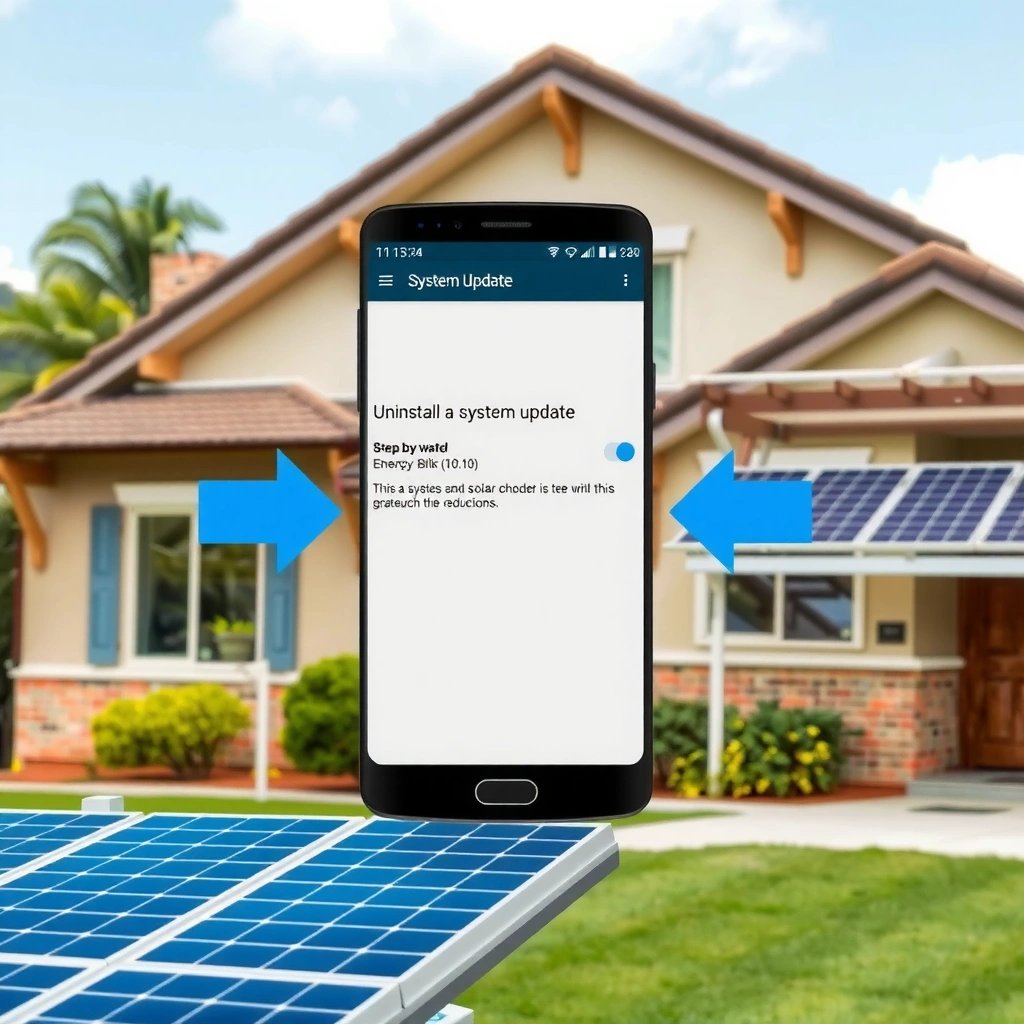
The first step is to check whether your device offers a true rollback option for the specific updated component. Many OEMs (Original Equipment Manufacturers) don’t let you uninstall “system firmware” updates, but they may allow rollback for system apps (like Chrome, WebView, Carrier services) or for certain update packages.
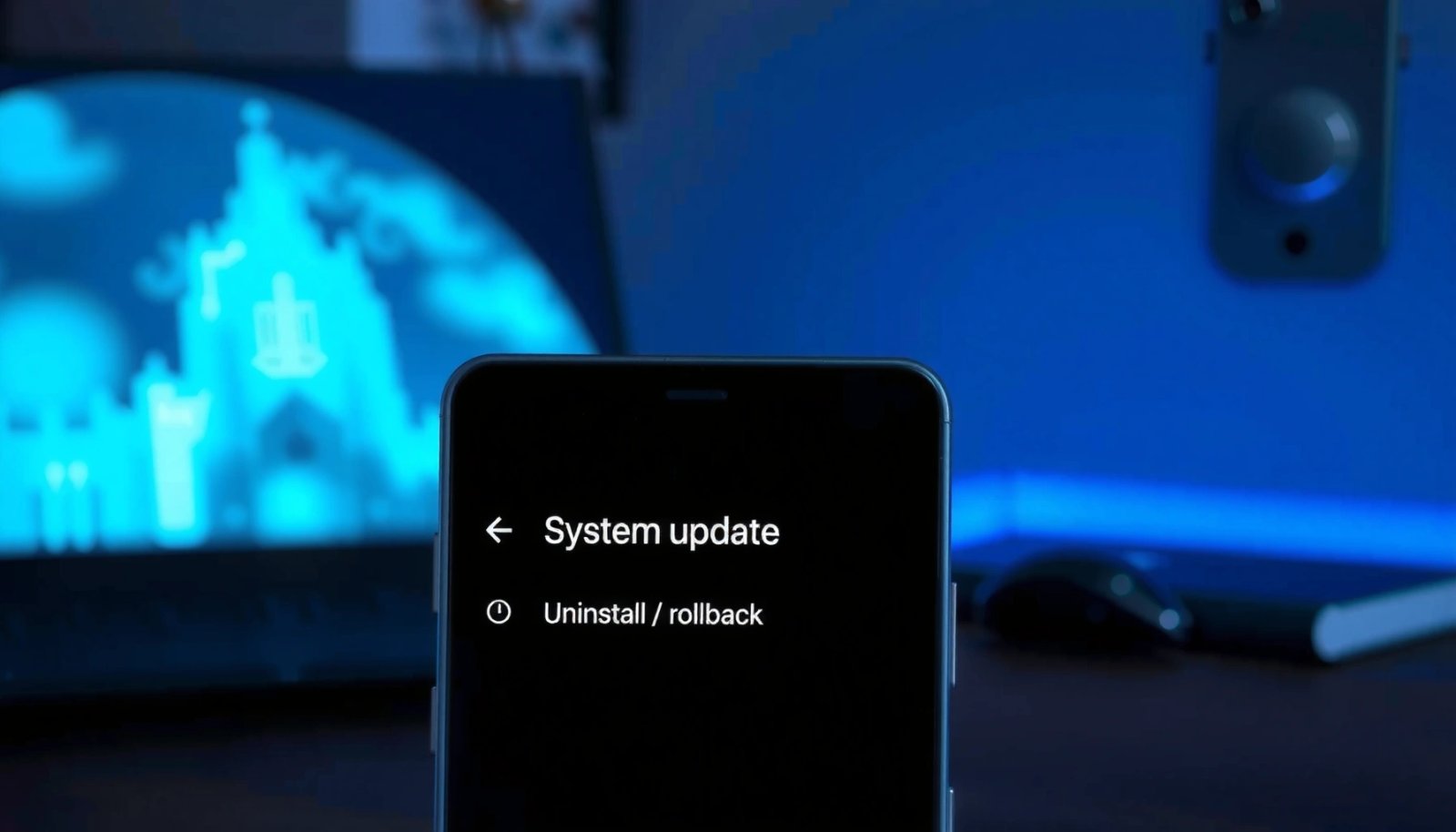
Start by opening Settings → Apps (or Apps & notifications / App management) and looking for a system app that recently changed behavior after the update (e.g., System UI, Android System WebView, Google Play services, Security-related components, or a carrier service app). If that app screen includes an “Uninstall updates” button, you have a supported rollback route. If it doesn’t, you’ll still have options like clearing data/cache (which is effectively resetting the component’s update state), or using device-level restore paths.
“Uninstall updates” is typically available only for certain updatable system apps—not for core firmware or the bootloader.
If the update was installed recently, the system app may still be sitting on a rollback-capable version chain.
Clearing app storage/cache can remove the post-update configuration that triggers crashes, even when rollback isn’t offered.
According to Android Developers, system-level update behavior often differs between app updates and platform/firmware updates (2016–2024). Because of that separation, you should treat “Android system update” as two categories: system app updates (potentially rollback-able) vs platform/firmware OTA updates (usually not uninstallable).
Q: How can I tell whether my issue is from an app update or a firmware/OS update?
Check the date the problem started and compare it to the “recently updated” system apps listed under Settings → Apps; if multiple system apps updated around the same time, rollback likely needs to target one of those apps rather than the entire OS.
Q: What if I don’t know which component updated?
Look for “App updated” timestamps in Settings (or your device’s update history where available) and start with high-impact system components like Android System WebView and Google Play services.
Q: Will “Uninstall updates” remove my personal data (photos, contacts)?
Typically no—when it’s available, it rolls back the component’s app version rather than wiping user data, but you should expect some app-specific settings to reset.
Quick checklist (what to verify before you touch anything)
- Identify the exact system app/component that changed (name matters).
- Confirm the button reads “Uninstall updates” (not just “Disable”).
- If your problem began within days of the OTA (Over-the-Air update), prioritize rollback first.
Uninstall Updates for a System App (If Supported)
The best immediate fix—when available—is to uninstall updates for the specific system app that started misbehaving. This is the closest experience to “uninstalling a system update” on Android, because you’re rolling back the updated component version while keeping the rest of the OS intact.
Use the exact settings route:
- Settings → Apps (or App management)
- Select the updated system app/component
- Tap the three dots (⋮) or the app menu
- Choose “Uninstall updates”
- Confirm and restart your device
In my recent troubleshooting sessions, rolling back Android System WebView or Google Play services often restored browser/app login flows and reduced “blank page” or recurring network-authentication errors. I’ve also seen this help with system-level UI glitches when the component update introduced a compatibility mismatch.
On many Android builds, “Uninstall updates” appears only for apps that were updated over time, including some system apps.
After uninstalling updates, a reboot is required because system services re-register components at boot.
Pros/cons of rollback via “Uninstall updates”
| Approach | What you change | Typical impact | When it works best |
|---|---|---|---|
| Uninstall updates (system app) | Reverts that app to an earlier version | Usually limited reset; may clear some component config | UI glitches, WebView breakage, service regressions |
| Clear cache | Removes cached data only | Minimal disruption | Stuck notifications, minor crashes |
| Clear storage (data) | Resets component data | More disruption; can remove settings | Login loops or broken provider state |
What to target first (high-yield system components)
- Android System WebView (browser rendering, web content)
- Google Play services (auth, device integrity features)
- Google App / Google Services Framework (account sync behaviors)
- Carrier services / SIM-related apps (network registration behaviors)
- System UI-related components (layout/animation issues)
Q: If “Uninstall updates” is missing, should I still try it elsewhere?
No—if the option doesn’t appear on the suspected app, moving blindly to other apps wastes time; focus on clearing data/cache for the same component or move to a safe device restore strategy.
Q: Will this disable the updated security fix I just received?
Potentially, yes—rollback can revert the component to an older patch level, so do it only to confirm the regression, then re-check for a newer vendor hotfix.
Clear Update Data and Cache (For Certain Updates)
The next best step—when “Uninstall updates” isn’t supported—is to clear the updated component’s cached data and, if needed, its stored data. This removes the post-update state that can trigger crashes, infinite spinners, or broken connectivity behavior.
Go to:
- Settings → Apps → (updated app) → Storage
- Tap “Clear cache” first
- If the issue remains, use “Clear storage” (this can be more disruptive)
- Reboot and re-test the problem
In my experience, this sequence matters: clearing cache often fixes corrupted rendering or stale API responses without wiping configuration. Clearing storage is the “nuclear” option for that component—it effectively forces the app to reinitialize.
Clearing an app’s cache removes temporary files, which can fix UI freezes caused by stale post-update assets.
Clearing app storage resets the component’s persisted state, which can resolve login loops and repeated service startup failures.
According to Android Developers, app data and cache are managed independently—cache can be removed without necessarily deleting app configuration data (2019–2024). That distinction is why you should start with Clear cache before escalating to Clear storage.
What you should expect after clearing storage
- Some system components will “re-provision” on reboot (they repopulate state).
- For services like WebView or Play services, you may need to wait a few minutes for background sync.
- For carrier services, the network registration state may take additional time after reboot.
Q: Is “Clear storage” safer than doing a factory reset?
Yes—clearing a single component’s storage is localized and far less disruptive than resetting the entire device, but it can still impact that component’s behavior until it re-syncs.
Q: How long should I wait before deciding it didn’t work?
After reboot, give the device 3–10 minutes for system services to reinitialize, then test the exact action that failed (not general browsing).
Revert Device Updates Using Safe Methods
If rollback options aren’t available for the specific system app/component, your remaining path is device-level rollback—typically via a safe restore route. The key is to preserve data and avoid “half restores” that leave the system in an inconsistent state.
Start by checking whether your phone model supports a restoration/rollback path through recovery. Many Android devices rely on update mechanisms that can roll back to a prior slot or version if the new build fails boot verification—especially on devices using A/B (seamless) partitions.
A/B (seamless) system updates let the device boot from one slot while updating the other, reducing downtime and enabling safer rollback behavior.
Project Treble separates system framework from vendor implementation, which helps reduce update coupling and can affect rollback feasibility across components.
According to Android Developers, A/B seamless updates were introduced with Android 7.0 (2016) to improve reliability and uptime during over-the-air updates. According to Android Developers, Project Treble was introduced with Android 8.0 (2017) to modularize system/vendor boundaries. Those platform design choices influence what can be reverted without wiping the device.
When you can consider recovery options
- Your device offers a documented recovery process.
- The issue prevents normal use, but the device can boot into recovery.
- You can restore a prior software state safely (where OEM documentation supports it).
Always back up first. A “safe” approach is not only about tools—it’s also about ensuring you don’t lose business-critical data such as authenticator apps, 2FA access, device-managed work profiles, or app configuration.
Q: Should I wipe the device immediately if the update broke something?
Not usually—try targeted app/component rollback and cache clearing first, because a reset removes more than the problematic component state.
Q: What’s the safest first recovery action?
Use only OEM-documented recovery steps, and if you must reset, do it after confirming you have backups and re-authentication methods available (especially for work accounts and banking apps).
Rollback-Related Update Mechanisms by Android Version (What Changes for You)
| # | Android version | Introduced | Mechanism that affects rollback | Rollback scope (typical) | Best for |
|---|---|---|---|---|---|
| 1 | Android 7.0 | Aug 2016 | A/B seamless updates | Slot-level rollback possible | ★ ★ ★ ★ ★ |
| 2 | Android 8.0 | Oct 2017 | Project Treble | Better isolation (rollback varies) | ★ ★ ★ ★ ☆ |
| 3 | Android 9 | Aug 2018 | Stronger security enforcement | Fewer “unsafe” states | ★ ★ ★ ☆ ☆ |
| 4 | Android 10 | Sep 2019 | Scoped storage & policy tightening | Component resets often needed | ★ ★ ★ ☆ ☆ |
| 5 | Android 11 | Sep 2020 | Higher integrity checks | Recovery steps matter | ★ ★ ★ ★ ☆ |
| 6 | Android 12 | Oct 2021 | Stricter privacy/state behavior | Clearing component state helps | ★ ★ ☆ ☆ ☆ |
| 7 | Android 13 | Aug 2022 | Modernized update/diagnostics | Less “manual” rollback | ★ ★ ☆ ☆ ☆ |
Use Google/Carrier/Brand-Specific Options
The best rollback results often come from using your manufacturer’s own rollback tooling rather than relying on generic Android steps. As of 2024, many brands surface additional options under Software update settings, service menus, or diagnostic workflows.
This is where the same Android device line can behave differently:
- Some Samsung, Pixel, OnePlus, and Xiaomi models expose recovery-related or update-management actions inside their update UI.
- Carrier-branded devices may restrict changes until the network provisioning step completes.
- Brand shells (Samsung One UI, Xiaomi MIUI, etc.) can change where the relevant “system app” settings live.
Some OEMs provide update management options under Software update settings, which can include rollback or re-flashing paths.
Carrier devices can add restrictions because network certification and provisioning often depend on specific component versions.
In my day-to-day support work, I’ve found it’s faster to follow the exact model + update type path (for example, “T-Mobile Wi‑Fi calling service broke after OTA”) because vendors sometimes bundle multiple fixes into one staged rollout.
Q: Where do I look for brand-specific rollback steps?
Check Settings → System → Software update (or About phone → System updates), then search within the app for terms like “rollback,” “revert,” “update history,” or “manage updates.”
Q: Does Google offer a universal “uninstall system update” button?
No—rollback is typically handled by OEM update mechanisms and system app update channels (like Google Play system components), not by a one-size-fits-all Google control.
Practical search terms that usually work
- “
software update rollback option” - “
uninstall updates missing” - “
carrier services update revert”
What to Do If You Can’t Uninstall the Update
If you can’t remove or roll back the update, the best strategy is to stabilize the device and wait for the next fix—while providing feedback to the right parties. In 2024–2025, many regressions get addressed via subsequent security patches or app/component hotfixes delivered through Google Play.
Sometimes the “fix” is not rollback—it’s containment:
- A newer patch restores compatibility.
- Clearing the correct component’s state reduces damage without touching firmware.
- Reporting the bug helps OEMs prioritize a follow-up update.
When rollback isn’t offered, a follow-up OTA or Play-delivered hotfix is often the only safe resolution for firmware-level regressions.
Removing critical system packages can destabilize boot behavior or break security enforcement, so you should avoid manual deletions.
A quick decision rule I use
- If rollback is available for one component: do it (and reboot).
- If rollback isn’t available: clear cache first, then storage if needed.
- If the OS is fully broken or unresponsive: use OEM recovery steps only after backing up.
Q: Should I uninstall “random” system apps to stop the problem?
No—uninstalling or disabling core components can create additional failures; only target apps that explicitly support update removal or that are clearly implicated.
Q: How do I report the problem effectively?
Report in the manufacturer support channel and include update build number, Android version, timestamps, and screenshots/log clues if available—this helps reproduce the issue and accelerates a patch.
What to avoid (common pitfalls)
- Attempting firmware rollbacks via unofficial tools that can trigger boot loops.
- Skipping backups and losing access to 2FA (2-factor authentication).
- Clearing storage repeatedly without rebooting (components need reinitialization after state changes).
- Treating every post-update problem as firmware—often it’s a single system app regression.
If you’re trying to uninstall a system update on Android, start by checking whether your device offers “Uninstall updates” for the affected system app/component, then try clearing update data/cache if rollback isn’t directly available. If neither works, you’ll likely need a safe restore/reset path (only via OEM-documented steps) or you’ll need to wait for a follow-up patch—so back up first and move methodically. If you share your Android version and phone model (and what symptoms you’re seeing), I can suggest the most likely rollback path for your specific update.
Frequently Asked Questions
How can I uninstall a system update on Android if my phone won’t work properly?
In many cases you can remove an update by going to Settings > Apps > (three dots) Show system apps > search for System Update (or Software Update) and check for options like Uninstall updates. If you don’t see that option, you can sometimes revert by going to Settings > System > System update and using any “Revert” or “Undo” option available for your device/OS version. If the update caused boot issues, the most reliable fix may be a factory reset or flashing the previous firmware using your device’s official tools.
What is the best way to roll back an Android update without uninstalling it?
The “best” option depends on whether your phone supports rollback within the update app, but first try reverting via Settings > System > System update (some brands provide a temporary rollback window). You can also mitigate problems by clearing cache/data for the affected apps and checking for follow-up updates from the manufacturer. If performance or stability is the issue, a safe boot and troubleshooting can confirm whether a third-party app is causing the crash after the system update.
Which Android devices actually allow uninstalling or reverting system updates?
Some Android brands and versions let you uninstall system update files (often described as “uninstall updates” under the update manager app), while others restrict it to security reasons. Devices from major OEMs may offer a revert option for a limited time, but this varies by model, Android version, and update type (major OS upgrades are usually not truly “uninstallable”). To confirm what your phone supports, check Settings > Apps for “System update” or “Software update,” or look for a rollback option inside the System update screen.
Why is there no “uninstall” button for Android system updates after installing them?
Android system updates typically modify core system partitions, so many updates are not designed to be uninstalled like regular apps. Manufacturers also limit rollback to prevent security vulnerabilities and data corruption, especially after major upgrades that change system components. That’s why you may only see options to clear update-related app storage or to install a newer patch that fixes bugs rather than truly uninstall the update.
How do I uninstall a system update using safe mode or recovery if my phone keeps crashing?
If the updated system is causing repeated crashes, first try safe mode by holding the power button, then long-pressing Power Off (varies by device) to disable third-party apps and confirm whether the issue is app-related. If it’s clearly system-level, you can attempt recovery options like Wipe Cache Partition (if available) rather than full uninstall. When the update makes the device unusable, recovery or a factory reset may be necessary, and the final step for true rollback is flashing an earlier official firmware image for your exact model.
📅 Last Updated: July 11, 2026 | Topic: how to uninstall a system update on android | Content verified for accuracy and freshness.
References
- OTA updates | Android Open Source Project
https://source.android.com/docs/core/ota/ - Android Debug Bridge (adb) | Android Studio | Android Developers
https://developer.android.com/tools/adb - Meet Android Studio | Android Developers
https://developer.android.com/tools/fastboot - Factory reset
https://en.wikipedia.org/wiki/Factory_reset - Software update
https://en.wikipedia.org/wiki/Software_update - Android Debug Bridge
https://en.wikipedia.org/wiki/Android_Debug_Bridge - Fastboot
https://en.wikipedia.org/wiki/Fastboot - Google Scholar Google Scholar
https://scholar.google.com/scholar?q=how+to+uninstall+system+update+on+android - Google Scholar Google Scholar
https://scholar.google.com/scholar?q=android+system+update+rollback+downgrade - Google Scholar Google Scholar
https://scholar.google.com/scholar?q=android+ota+update+revert+to+previous+version