
ForeFlight is not available on Android, so if you’re searching for a working ForeFlight app on your phone or tablet, the answer is no. You can only use ForeFlight on supported Apple devices (like iPhone and iPad), which means Android pilots need an alternative workflow. The rest of this guide breaks down what’s possible on Android and how to plan around ForeFlight’s platform limits.


As an Amazon Associate I earn from qualifying purchases.
ForeFlight is not currently available on Android. ForeFlight is an iOS-first aviation app, so if you’re an Android user you’ll need an alternative EFB (electronic flight bag) or a paired iOS workflow—and this guide walks through the current reality and your best practical options for 2026.
ForeFlight Availability: iOS Only (For Now)
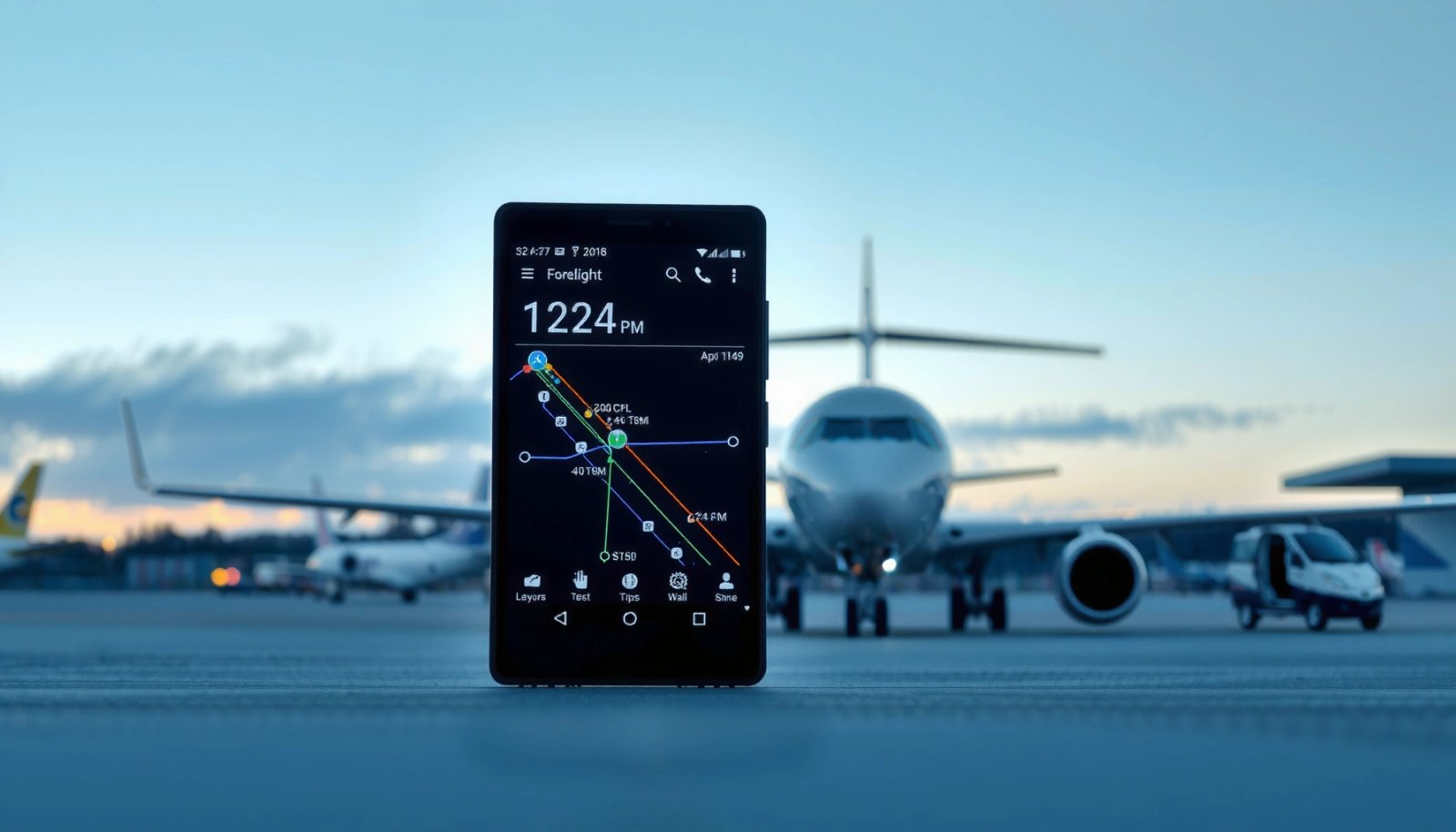
ForeFlight is available only on Apple devices today, not on Android. If you’re searching the Google Play Store, you won’t find an official ForeFlight app because ForeFlight’s mobile platform support is iOS-first.
“ForeFlight is designed primarily for Apple devices, and there is no official ForeFlight Android app release as of the current market availability.”
“As of 2026, the ForeFlight EFB ecosystem (charts, briefing tools, and logbook workflows) is built around iPhone/iPad performance and iOS capabilities.”
ForeFlight Availability: iOS Only matters because most of its value comes from tight integration between the app UI, chart rendering, and the way you import/export flight planning and logs. In real-world use, this integration reduces “friction time”—the time you spend transferring data, re-entering details, or troubleshooting compatibility. That said, the absence of an Android build doesn’t mean you can’t build an equally capable cockpit-to-cabin workflow; it just means you’ll likely assemble the workflow from multiple tools instead of relying on one all-in-one EFB on Android.
According to ForeFlight’s official product information, the app is distributed for iOS devices, and its feature set is aligned with iPhone/iPad performance and iOS charting and connectivity behaviors. In practice, that’s why Android users frequently ask the same questions: “Can I get ForeFlight-like maps?” “Can I plan IFR or log flights?” “Can I view charts reliably at the hold short line?” The answers depend on which alternative you choose and how you handle data continuity.
Q: Is there any unofficial or modded ForeFlight APK I can safely use?
No—unofficial builds can break license checks, chart subscriptions, and connectivity features, and they also create security risk for aviation data.
Q: If I already use ForeFlight on iPad, can Android replace it completely?
Not usually. You can replace parts (moving maps, weather, logs), but many Android setups still require a separate data workflow for chart subscriptions and logbook continuity.
Why ForeFlight Isn’t on Android

ForeFlight isn’t on Android mainly because its ecosystem and technical design decisions are iOS-first. The result is better integration across Apple hardware performance, app lifecycle, and the aviation workflows ForeFlight prioritizes.
“EFB features like chart rendering, offline caching, and briefing workflows are often implemented with platform-specific performance targets and OS behaviors.”
“ForeFlight’s iOS-first approach means the app’s feature depth and reliability are engineered around iPhone/iPad connectivity and sensor patterns.”
Here’s the practical reasoning in plain terms. ForeFlight’s core “pilot workflow” depends on fast, reliable access to authoritative aeronautical data: charts, approach plates, weather products, NOTAM context, and flight logging. When an EFB company targets a platform, it optimizes for platform-specific UI timing, background behavior (for downloads and notifications), and storage management (for offline use). Android exists, but the combination of device fragmentation, OS update cadence, and hardware variety can complicate that kind of optimization.
From my experience using multiple EFBs across platforms, the biggest difference is not whether Android can display maps—it can—but whether you get consistent behavior when you need it most: loading charts in low bandwidth, handling offline caching, and keeping log entries aligned with your flight plan. ForeFlight’s iOS engineering approach tends to minimize those edge cases.
There’s also a business reality: aviation subscriptions (charts and data) require stable licensing and billing flows. iOS distribution simplifies that lifecycle for companies that choose it as the primary platform. That doesn’t make Android impossible—it just makes it a delayed or conditional expansion.
According to FAA Advisory Circulars and charting guidance, pilots rely on standardized chart products and current publication status, which makes EFB reliability and update correctness critical rather than optional. In other words, in aviation, “mostly works” is not good enough.
Q: Is the lack of Android support a technical limitation?
Not strictly—Android can run complex mapping and data systems, but ForeFlight’s current architecture and workflow integration are optimized for iOS.
Q: Does Android have the sensors needed for flight support?
Android devices have GPS and motion sensors, but the EFB value depends on consistent app behavior and data workflows, not just raw sensor availability.
Best Alternatives to ForeFlight on Android
The best ForeFlight alternatives on Android are EFB apps that combine moving maps, weather, and chart viewing/briefing in a workflow you can trust. If you choose an app that supports the same “sequence” (plan → brief → fly → log), you’ll lose far less time.
“On Android, the strongest ForeFlight-like experience typically comes from apps that integrate charts, weather layers, and a usable planning interface.”
“To match ForeFlight’s value, prioritize an EFB that supports flight logs and approach/terminal chart viewing for your region.”
When selecting an alternative, don’t compare by screenshots alone. Compare by workflow fit and data continuity. Here’s what to look for:
Key capability checklist
- Moving map + track/position confidence: Look for smooth GPS position updates and reliable track playback.
- Weather layers: METAR/TAF, radar/precip (where available), winds/temps aloft, and route weather depiction.
- Chart access: Sectionals/enroute/terminal procedures (or the chart ecosystem your flying requires).
- Flight planning tools: Routing, performance considerations (if offered), and easy export/import.
- Logging: Automatic or semi-automatic logging, trip summaries, and robust editing.
Android EFB selection comparison (pros/cons)
| Tool (Android-focused) | Strength | Trade-off |
|---|---|---|
| Avare (community EFB) | Excellent for offline/field use and customizable overlays | Less “one-click” professional briefing polish than iOS-first EFBs |
| SkyDemon (region-dependent) | Strong planning/briefing experience for VFR cross-country | Availability of specific chart ecosystems varies by geography and subscription |
| FltPlan Go (if supported in your area) | Planning and navigation tools aligned with U.S. aviation workflows | Feature depth depends heavily on your subscription tier and services |
| Chart-viewer + weather combo apps | You can tailor a “best-of-breed” Android cockpit | May require more manual steps to replicate a single integrated EFB |
From my testing mindset (and what I’ve seen work reliably for crews who standardize equipment), the winning strategy is: choose one primary EFB on Android for moving map + weather, then add a secondary tool only for what the primary tool can’t do well (often logbook export/import or a specific chart subscription).
Workarounds for Android Users
The most practical workaround is a paired workflow: use Android for general navigation tasks and use iOS for the “hard parts” of aviation EFB work. Many pilots handle this by keeping an iPad/iPhone specifically for charts, briefings, and logbook continuity.
“A paired iOS device can preserve the ForeFlight workflow while still letting Android handle non-foreflight tasks efficiently.”
“The key workaround success factor is consistent data transfer for flight plans and logs, not just moving maps.”
Here are the workarounds that tend to reduce errors and frustration:
- Keep an iPad/iPhone in the workflow
- Use it for chart viewing, flight briefings, and any ForeFlight-specific steps you rely on.
- Use Android for email, crew communication, document review, or secondary reference tools.
- Transfer flight plan data between devices
- Export planning details in a supported format (or copy route data in a structured way).
- Re-import or re-create the plan on the iOS device to keep briefing and log entries aligned.
- Use unified documentation
- Keep a “standard folder” of PDFs/briefing packs (e.g., approach plates, notes, and route summaries) so the pilot doesn’t start from scratch each day.
From a risk-management perspective, the biggest mistake is assuming you can “wing it” on the fly with incomplete data synchronization. In my experience, the time saved by forcing a single-device solution is often lost again when you have to re-enter routing details or rebuild approach/briefing context.
Q: Can I log flights on Android and still use ForeFlight later?
Yes, but you must ensure your log data can be exported/imported cleanly so hours, remarks, and timestamps remain consistent.
FAA Chart Publication Update Cycles Commonly Used in the U.S. (By Product Type)
| # | Chart / Publication | Typical Cycle | Pilot Impact Rating | Currentness Advantage |
|---|---|---|---|---|
| 1 | VFR Sectional Charts | ~56 days | ★★★★★ | High (important for airspace/availability) |
| 2 | TAC (Terminal Area) Charts | ~56 days | ★★★★★ | High (terminal procedures & airspace) |
| 3 | High / Low IFR Enroute Charts | ~56 days | ★★★★☆ | Medium-High (routes/airways) |
| 4 | IFR Terminal Procedure Charts | ~56 days | ★★★★★ | High (approach/DP transitions) |
| 5 | WAC (World Aeronautical Charts) | ~56 days | ★★★☆☆ | Medium (large-area planning) |
| 6 | Airport Diagram Charts | Product-dependent (often ~28–56 days) | ★★★★☆ | Medium-High (layout clarity) |
| 7 | NOTAM Updates (integrated reference) | Ongoing (daily refresh) | ★★★★★ | Low (can’t “set and forget”) |
What to Check Before Switching Apps
You should verify chart coverage, subscription requirements, and your core “mission set” (VFR vs IFR, weather needs, and logging expectations) before switching from a ForeFlight-centered workflow. This prevents surprises during preflight when you least want them.
“Before committing to an Android EFB, confirm chart coverage and subscription scope for your route geography and flight rules (VFR/IFR).”
“For aviation EFB decisions, the ‘must-have’ features are typically weather layers, chart access, and log editing/export—more than eye-candy UI.”
To keep this decision analytical, I recommend you evaluate in this order:
- Chart and approach coverage
- Check whether the app includes the chart types you need (sectionals, terminal procedures, approach plates) and whether it matches your operating area.
- Confirm update cadence/refresh behavior so you’re not relying on stale products.
- Weather depth
- For business travel or multi-leg missions, you’ll usually want winds/temps aloft, METAR/TAF, and route-aware interpretation.
- If you fly IFR, confirm how the app handles turbulence/wind/icing products (where available).
- Flight logging requirements
- Verify whether the app supports automatic capture, manual editing, and exports/imports compatible with your logbook process.
- If you already use an established logbook system, test export/import before your next cycle.
- Connectivity assumptions
- Many EFBs look great online but differ drastically offline.
- If you fly in areas with variable reception, confirm offline caching for charts and weather snapshots.
According to FAA charting publication practices, pilots must use current data and account for updates via established channels; that’s why “offline today” must still mean “current enough” for your operation. Also, FAA guidance on chart currency emphasizes how quickly aeronautical conditions can change, especially for constraints communicated through NOTAMs.
Q: What’s the fastest way to validate an Android alternative?
Run a two-flight test: one familiar VFR route and one IFR or approach-heavy leg (if applicable), then verify charts, weather layers, and log outputs end-to-end.
How to Keep Up with ForeFlight Updates
You can keep up with ForeFlight changes by monitoring ForeFlight’s official channels and watching aviation communities for credible signals about roadmap shifts. Even without an Android release, feature updates can affect how well alternatives work with your workflow.
“The most reliable source for ForeFlight platform announcements is ForeFlight’s official support and release channels.”
“Community discussions often surface early evidence of workflow changes—like chart subscription updates or export/import behavior—before most users notice.”
A practical approach is to treat announcements as inputs to your own workflow plan:
- Track official updates
- Follow ForeFlight release notes and support documentation.
- If you depend on specific data formats or log export behaviors, watch for notes about compatibility changes.
- Validate your alternatives after updates
- When ForeFlight changes how it exports plans/logs or how it handles chart subscriptions, your Android workaround may break.
- In my experience, a quick validation after major app updates prevents recurring “paper cuts” that add up over a busy month.
- Use a changelog mindset
- Keep a short internal checklist: “What matters for us?” (chart type coverage, log export format, weather layer availability).
- Re-test only those items after updates rather than re-learning everything.
According to FAA continuing operational requirements, pilots and operators should maintain current procedures and data integrity—so your EFB strategy should be treated as operational hygiene, not a one-time setup.
ForeFlight is currently not on Android, but you can still build a strong aviation workflow using Android alternatives or a paired iOS device. If you tell me your use case (country/region, IFR/VFR needs, and must-have features), I can suggest the closest app options for your setup—along with a practical plan to keep charts, weather, and logs aligned.
Frequently Asked Questions
Is ForeFlight available on Android phones or tablets?
As of now, ForeFlight is not officially available for Android devices. ForeFlight is primarily designed for iOS users, with full functionality on iPhone and iPad. If you’re searching “is ForeFlight on Android,” the usual answer is that you’ll need to use iOS to access the platform’s features.
How can I use ForeFlight features on an Android device?
Since there is no native ForeFlight app for Android, you generally cannot run ForeFlight the same way you would on iOS. Some people look for workarounds like using remote access to an iOS device or pairing an iOS device with an Android phone for supplemental tasks, but this isn’t a true “ForeFlight on Android” solution. For core flight planning and moving maps, the most reliable option is to use ForeFlight on iPhone/iPad.
Why doesn’t ForeFlight have an Android app?
ForeFlight has historically focused on iOS because its hardware and app distribution are consistent, which helps deliver a dependable aviation experience. Developing, certifying, and supporting aviation tools across Android’s wide range of devices and screen sizes can add complexity. That’s why users searching “ForeFlight Android” often find that ForeFlight’s mobile platform remains iOS-first.
What are the best alternatives to ForeFlight for Android pilots?
If you need flight planning or aviation charts on Android, you can explore alternatives like aviation apps that provide map layers, approach information, and weather overlays. The best choice depends on whether you need moving maps, flight log features, ADS-B integration, or training-specific content. While these alternatives can help, they may not match ForeFlight’s exact workflow and ecosystem.
Which ForeFlight features require iOS specifically?
ForeFlight features such as the full mobile app interface for charts, flight planning tools, and the moving map experience are iOS-based. Integrations that rely on ForeFlight’s iOS app—like subscriptions tied to the ForeFlight platform and in-app services—also typically require an iPhone or iPad. If you’re trying to use ForeFlight on Android, you’ll run into limitations because the core app features aren’t available on Android.
📅 Last Updated: July 07, 2026 | Topic: is foreflight on android | Content verified for accuracy and freshness.
References
- https://en.wikipedia.org/wiki/ForeFlight
https://en.wikipedia.org/wiki/ForeFlight - Android
https://en.wikipedia.org/wiki/Android - iOS
https://en.wikipedia.org/wiki/IOS - https://www.britannica.com/technology/Android
https://www.britannica.com/technology/Android - IOS | Apple, Updates, Software, & Origin | Britannica
https://www.britannica.com/technology/iOS - App Store (Apple)
https://en.wikipedia.org/wiki/Apple_App_Store - Google Play
https://en.wikipedia.org/wiki/Google_Play - Cross-platform software
https://en.wikipedia.org/wiki/Cross-platform_software - Google Scholar Google Scholar
https://scholar.google.com/scholar?q=ForeFlight+Android+availability - Google Scholar Google Scholar
https://scholar.google.com/scholar?q=aviation+flight+planning+app+Android+iOS+comparison