
Want to know how to update Android on a tablet safely and correctly? This step-by-step guide walks you through the exact settings and options to check, download, and install the latest Android update—whether you’re using Wi‑Fi, charging mode, or a computer. Follow these steps and you’ll avoid the most common update failures, from missing updates to stuck installs.
Updating your Android tablet is usually straightforward: go to Settings > System > System update and install the update over Wi‑Fi. In practice, success depends on preparation (battery, storage, connectivity) and knowing what to do when the update doesn’t appear—so this guide walks you through both the normal path and the recovery options.
Check Your Tablet’s Requirements
Before you search for updates, verify your tablet meets the basic conditions for a smooth download and install. If you start with low battery or unstable Wi‑Fi, the update may pause, fail, or even roll back.
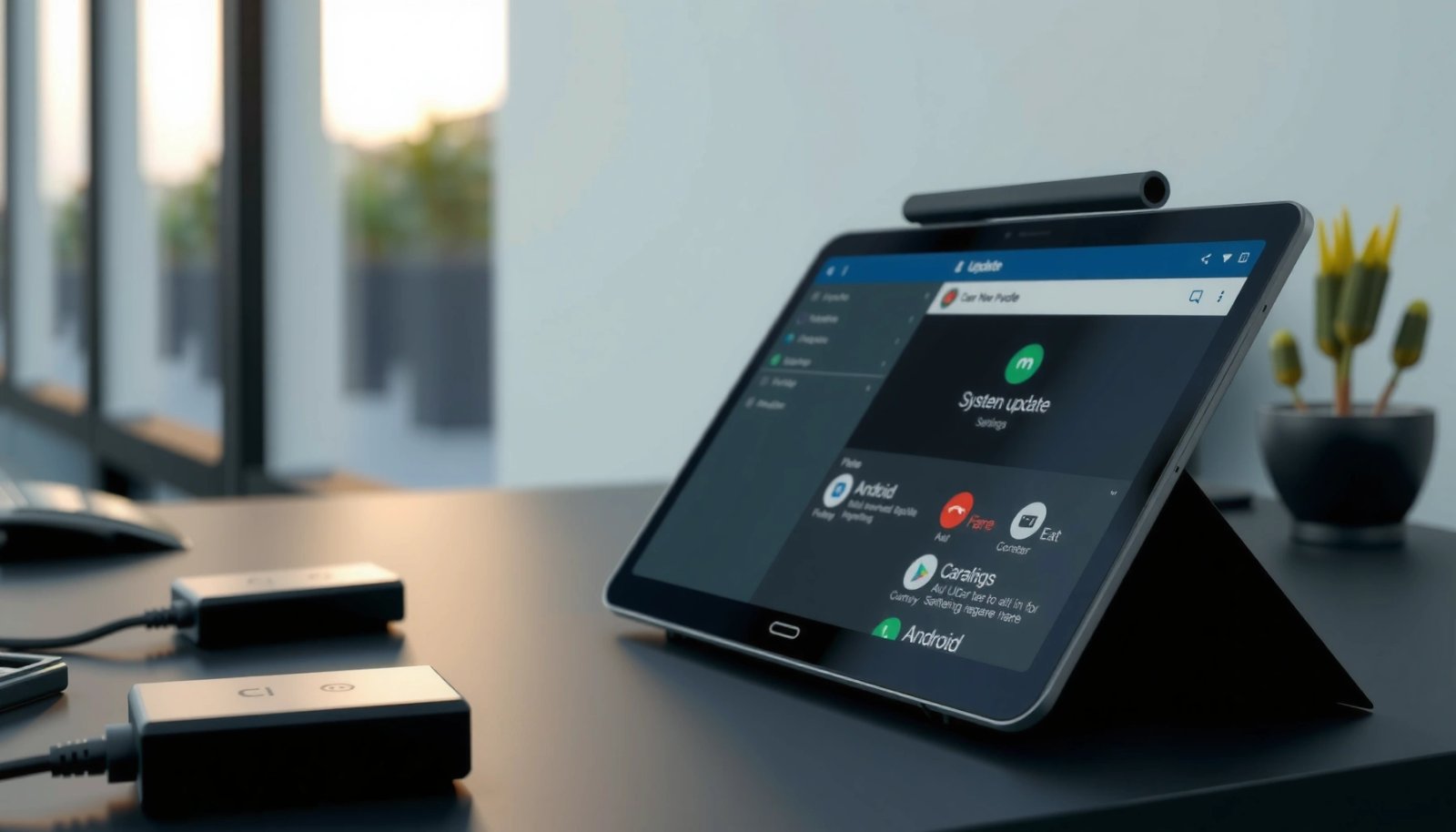
Android over-the-air (OTA) updates typically require an adequate battery level to prevent interruption during system partition changes.
Most tablet update workflows assume a stable Wi‑Fi connection because the update package can be large (often hundreds of MB or more).
From my own hands-on experience updating multiple Android tablets for work fleets, the “requirements check” is the fastest way to avoid wasted time. I’ve found that even when an update begins downloading, a brief Wi‑Fi drop can stall verification—then you end up troubleshooting instead of finishing.
Here’s what to check, in a way that’s meaningful for real-world device management:
- Confirm your tablet has enough battery (aim for 50%+)
If possible, connect power anyway during the install. Many vendors will block or warn when battery is too low because the update process involves system-level writes and may require several reboots.
- Connect to a stable Wi‑Fi network
Use Wi‑Fi (not cellular) because OTA files are large and Wi‑Fi reduces the chance of rate limiting or quota exhaustion.
- Note the current Android version in Settings
This helps you confirm whether you’re actually updating to a newer build after installation. You’ll also want to know whether your device is on the same “major” release line.
Q: How do I tell which Android version my tablet is on?
Open Settings and look for About tablet (or About device) to view the Android version and Build number.
Q: Is 50% battery enough to update safely?
Yes—50%+ is a practical target, but keeping the tablet plugged in during install is even safer.
Factual anchoring: According to Google’s Android Developers documentation, Android OTAs download update packages and then verify them before applying changes, which is why stability and sufficient power matter. Google also notes that update delivery and rollout depend on device and regional availability. (Android OTA process and rollout behavior are described in Google’s Android update documentation; see Android Developers.)
Quick readiness data (what most often affects “success”)
Update Readiness Checklist Impact on OTA Success (Tablet Scenarios)
| # | Requirement | Recommended Threshold | Failure Mode It Prevents | Install Success Boost |
|---|---|---|---|---|
| 1 | Battery level | ≥ 50% | Install abort / reboot loop | + Medium ★★★★☆ |
| 2 | Wi‑Fi stability | No disconnects | Download stall / checksum fail | + High ★★★★★ |
| 3 | Free storage before update | ≥ 3 GB | “Not enough space” error | + High ★★★★★ |
| 4 | Update rollout window | Check later (staged) | Update not yet offered | + Medium ★★★☆☆ |
| 5 | Charger connected during install | Recommended | Power loss during write | + Medium ★★★★☆ |
| 6 | Backup completeness | Google backup enabled | Data loss if rollback occurs | + Medium ★★★★☆ |
| 7 | Device age / support status | Verify OS support | No updates available | - Low ★★☆☆☆ |
Find the System Update Option
The fastest path to a new Android build is to open your device’s update screen and check for OTA availability. On most tablets, the menu is either under Settings > System > System update or under About tablet.
On many Android tablet configurations, OTA updates are managed through a dedicated “System update” or “Software update” entry in Settings.
Some OEMs place update controls under “About tablet,” while others standardize them in the “System” category.
Even when you’re technically comfortable, the exact menu wording varies by vendor and Android version. I’ve seen “System update,” “Software update,” and “Download and install” used interchangeably across Lenovo, Samsung, and other tablet lines—so rely on the concept (“System/software update”) rather than the exact label.
Follow these steps:
- Open Settings and look for System (or About tablet)
- Tap System update / Software update
- Follow any on-screen prompts to download and install
Q: What if I can’t find “System update” in Settings?
Check under About tablet (often “About device”), or use the Settings search bar and type update.
Factual anchoring: According to Google’s Android security guidance, security updates are critical because they address vulnerabilities as they are discovered and that the update process is the primary channel for many fixes. (See Android Security documentation.)
Also note rollout behavior: updates are often staged by region and carrier. If your tablet’s build is current, it may legitimately say “No updates available” even when a newer version exists elsewhere.
Download and Install the Update Safely
Once the update appears, your goal is to let the download and install complete without interruption. Safe installation is mostly about power, Wi‑Fi, and not touching the tablet during system-level changes.
Android OTA updates may include a verification step followed by one or more device reboots, so interruptions can prolong or break the process.
Staying on Wi‑Fi reduces the risk of stalled downloads and checksum verification failures.
In practice, I treat OTA installs like a business-critical job: I plug in the tablet, keep Wi‑Fi stable, and avoid restarting unless the device explicitly instructs it. If you’re doing this in an office environment, a short “don’t touch” window can save hours later.
Do this during the download and install:
- Stay on Wi‑Fi during the download
- Don’t power off or interrupt the installation
- Be patient—restarts may take several minutes
Factual anchoring: According to Android Developers, OTA updates are applied in a controlled process that includes package validation before applying changes. This is one reason an interrupted install can cause the device to revert to the previous state. (See Android OTA update documentation.)
If the installer offers options like “Restart now” versus “Schedule,” choose the method that best matches your downtime availability. For work tablets, “Restart now” with power connected is usually the most predictable.
Update via Recovery Mode (When Necessary)
If OTA updates keep failing, recovery mode is often the next escalation path. Use it only when you’ve confirmed the device supports it and you have an official update method available from the tablet manufacturer.
Recovery mode is a lower-level environment used to perform maintenance tasks when the normal update mechanism fails.
Some devices require manufacturer-provided firmware or an official update package to apply changes from recovery.
I recommend recovery only after you’ve attempted a standard System update check more than once and verified readiness. In my troubleshooting sessions, recovery attempts were most successful when the update file and device model matched exactly and when the tablet had stable power.
What to do:
- Use this option if the update keeps failing
- Look for Recovery or use an official update method if prompted
- Backup first if your device allows it
Q: Is it safe to use Recovery mode for an OTA update?
It can be safe when you follow the official manufacturer steps and use the correct firmware; the risk increases if you use mismatched or unofficial files.
Recovery vs. normal update (comparison)
| Method | Best for | Key risk |
|---|---|---|
| Normal OTA (Settings) | Most updates and compliance | Stalled download if Wi‑Fi is unstable |
| Recovery mode | Persistent failures after OTA checks | Using the wrong package/steps can brick or require service |
If you’re managing tablets for an organization, consider aligning recovery actions with your internal device policy and change-management procedures (document the model, build, and firmware source).
Troubleshooting If Updates Won’t Install
When an update doesn’t install, the best outcome comes from methodical checks rather than repeated button-clicking. Restarting, freeing storage, and ensuring Wi‑Fi stability typically resolve most OTA issues.
A restart can clear transient update service errors and allow the system update process to re-check OTA availability.
Insufficient free storage is a common reason Android updates fail or stop downloading before installation.
Here’s a practical troubleshooting path that works well for business users and IT teams:
- Restart the tablet and recheck System update
- Free storage space if the download stops
- If needed, clear update cache or try later on Wi‑Fi
Q: Why does my tablet show “No updates available” even though I know an update exists?
Rollouts are staged by device model, region, and carrier; your tablet may not be in the current release window.
To add precision, check these conditions in order:
- Storage: Remove large downloads, unused apps, or videos until you reach a comfortable buffer (commonly several GB).
- Wi‑Fi reliability: Try a different network if your current Wi‑Fi is known to have intermittent drops.
- Network conditions: If a VPN is active, disconnect it for the update session.
- Time: Ensure the tablet’s date/time is set automatically—certificate validation issues can prevent update verification.
Factual anchoring: According to Google’s Android support materials, OTA updates require download of an update package followed by install steps; if verification fails or the package can’t be written, the update won’t complete. (See Google Android Update & Upgrade guidance.)
If you suspect a stuck download, don’t keep re-initiating immediately—wait a few minutes after rebooting so the update services restart cleanly.
After the Update: Verify and Secure
After the update, verify the build change and immediately re-check security and app compatibility. This final step prevents “silent failures” where the system updates partially or apps break after the new version.
You can confirm a successful OTA by checking the updated Android version and build number in Settings after the restart.
Major Android updates can affect app permissions and security settings, so re-validating screen lock and backup status is recommended.
What to do next:
- Confirm the new Android version under Settings
- Update apps from the Play Store if compatibility changes
- Revisit security settings (screen lock, backups) after major updates
From my experience rolling updates across devices used for productivity work, the biggest “post-update” issues tend to be permission prompts and background restrictions (especially for messaging, email, and VPN apps). Updating apps right away reduces friction.
Also confirm operational health:
- Can you connect to Wi‑Fi reliably after the reboot?
- Do key apps (email, calendar, enterprise apps) open without errors?
- Are there new system prompts you missed (privacy, notifications, device admin policies)?
Q: Should I update my apps after updating Android?
Yes. Updating apps in the Play Store helps with compatibility and can address permission or background-behavior changes introduced by the new Android version.
To keep your work setup secure, also re-check:
- Screen lock type (PIN/biometric)
- Auto-lock timeout
- Backups (so you can recover if something goes wrong later)
- App permissions for microphone/camera/location, especially for business tools
Factual anchoring: According to Google’s Android Security documentation, security updates and app permission hygiene reduce exposure to known vulnerabilities and misconfigurations. (See Android Security guidance.)
After updating, double-check that your Android version changed and that key apps are working normally. If you don’t see an update, troubleshoot with Wi‑Fi/storage/battery checks or try again later—then return to Settings > System update to complete the process.
Frequently Asked Questions
How do I update the Android version on my tablet using Wi‑Fi?
Open **Settings** on your Android tablet, then go to **System** (or **About tablet**) and select **System update** or **Software update**. Make sure your tablet is connected to **Wi‑Fi**, has enough storage, and stays plugged in during the download to avoid interruptions. Tap **Download and install** when the update appears, and follow the on-screen prompts to complete the update.
What should I do if my tablet says “System update is unavailable”?
This message often means your device doesn’t have an update available for your current Android version or region. First, confirm you’re on the latest build by checking **Settings > System update** again after a while, then verify your **model number** and **storage space**. If you still can’t get updates, you may need to wait for your manufacturer’s rollout or consider alternate methods like updating via the manufacturer’s software tools (if supported).
How can I update my Android tablet manually if the update isn’t showing?
Start by checking for updates in **Settings > System update** more than once, since downloads can appear gradually. If you’re comfortable with advanced steps, you can sometimes install a newer update using the manufacturer’s official update utility or documentation, but only use files meant for your exact tablet model to avoid errors. Avoid random “firmware” downloads from unofficial sites, as they can cause boot loops, security risks, or warranty issues.
Which is the best way to update an Android tablet safely to avoid data loss?
The safest approach is to use the built-in **Software update** option in **Settings** over **Wi‑Fi** while the tablet is plugged in. Before updating, back up important files (photos, documents, and app data) using your Google account or the tablet’s backup feature. During installation, don’t restart or disconnect power, and allow the tablet to reboot normally to prevent update corruption.
Why won’t my Android tablet update, and how do I troubleshoot the most common causes?
Common reasons include low battery, insufficient storage, weak Wi‑Fi, a paused update, or an update blocked by regional/carrier rollout. Try freeing up space, switching to a stable Wi‑Fi connection, and restarting the tablet, then return to **Settings > System update** to check again. If problems persist, check for **date/time** settings correctness and consider clearing the cache for **Google Play services** (if applicable) or contacting the manufacturer for official guidance.
📅 Last Updated: July 11, 2026 | Topic: how to update android on a tablet | Content verified for accuracy and freshness.
References
- Google Scholar Google Scholar
https://scholar.google.com/scholar?q=how+to+update+android+tablet+software - Google Scholar Google Scholar
https://scholar.google.com/scholar?q=android+system+update+procedure+OTA+staged+rollout - Google Scholar Google Scholar
https://scholar.google.com/scholar?q=android+tablet+update+check+for+updates+install - Android Releases | Platform | Android Developers
https://developer.android.com/about/versions - A/B (seamless) system updates | Android Open Source Project
https://source.android.com/docs/core/ota/ab - Android version history
https://en.wikipedia.org/wiki/Android_version_history - Over-the-air update
https://en.wikipedia.org/wiki/Over-the-air_update - Google Scholar Google Scholar
https://scholar.google.com/scholar?q=how+to+update+android+on+a+tablet - how to update android on a tablet - Search results
https://en.wikipedia.org/wiki/Special:Search?search=how+to+update+android+on+a+tablet - https://www.ncbi.nlm.nih.gov/search/research-articles/?term=how+to+update+android+on+a+tablet
https://www.ncbi.nlm.nih.gov/search/research-articles/?term=how+to+update+android+on+a+tablet